Collaboration between disability and inequality movements can amplify voices and strengthen demands for social change, yet it often does not reach its full potential. Insights from activists in Ghana and Kenya reveal how stigma, power imbalances, and inaccessible systems undermine collaboration—and demonstrate why intentional approaches to trust-building and inclusion are essential. By working together across movements, stronger, more inclusive partnerships for lasting change can be built.
A few years ago, colleagues from around the world working in the disability sector began talking about the connections between the disability and inequality movements. We noticed that the integration of disability as a key dimension of injustice in inequality campaigns and programming was far from routine. This is despite 16% of the global population being made up of people with disabilities. Keen to understand more, we set up a research study connecting with disability and inequality activists across Ghana and Kenya to better understand the challenges and explore the potential for more inclusive collaboration.
Through our research, we learned that activists consider collaboration to be vital to amplifying voices for social change. For example, Francis Asong, Executive Director of Africa Disability Institute, emphasised the need to bring people together to forge a united front and have a stronger voice. However, the interviewed activists agreed that collaboration is still often held back by a complex mix of stigma, limited understanding, and structural drivers. To address this issue, we worked with the research participants to co-develop a set of resources designed to identify the gaps and challenges around collaboration between inequality activists and disability activists. These resources highlight that to build strong collaborations, it is vital to take an intentional approach to inclusion and accessibility and build trust by addressing underlying power dynamics.
Building trust and addressing power dynamics
Many barriers to collaboration that the study participants shared with us were related to power dynamics between unequally resourced or unequally respected groups. Funder behaviour was seen as driving unhealthy competition between organisations, which limited opportunities to collaborate well. Smaller groups, especially in the disability space, felt used in tokenistic ways to secure funds. They explained that they often didn’t have equal decision-making power or resources compared to their larger collaborators, even though they were doing much of the work on the ground. These kinds of issues can then lead to a breakdown in trust, further limiting opportunities for future collaboration.
Some of the collaboration barriers: one is poor communication that leads to misunderstandings, and the other barrier is a lack of trust. You find team members don't trust the organisation that one is working with because maybe in one way or another they have been betrayed.Esther Mwaniki, Inclusion Advocate - Kenya
Therefore, the activists we spoke with felt that building trust and addressing unequal power dynamics is essential for strong collaboration. It was seen as important for leveraging new ideas and the diverse skills and strengths that different actors bring. Pooling resources to tackle challenges was also seen as a key aspect of collaboration, but it was only seen as successful once a basis of trust had been built. Activists felt that by coming together, it was often possible to expand opportunities for change, rather than getting trapped in cycles of competition with one another. Kevin Sudi, Country Programme Manager for CBM Global Disability Inclusion – Kenya, highlighted that often the only way to address the complex challenges of today is to come together as one collective voice.
Taking an intentional approach to inclusion and accessibility
Study participants highlighted the fact that a lack of accessibility is not just about inaccessible infrastructure, but also includes attitudinal and stigmatising barriers, which can lead to people with disabilities being treated as junior partners or considered as difficult to work with. Hikmat Baba Dua, Executive Director of FEAD Ghana, emphasised the challenges faced in finding compromise when two organisations have a fundamental power imbalance. Participants noted that this is why collaboration needs to be intentionally planned from the very start to give everyone equal voice and access, and tackle issues of power and trust head-on.
Valuing and acting on each other's perspectives are key in this process. In practice, this looks like shared ownership and respectful engagements with clear agreements and shared goals. Successful collaboration generates spaces where people are confident and comfortable bringing their full selves to that space.
Importantly, participants also emphasised that good collaboration is ongoing and flexible, rather than a one-off action. In essence, we’re talking about relationship-building.
Great collaboration is where you come with success, there's synergy, creativity, there's celebration. When you collaborate, you try to push a voice, you amplify it. At the end of the day, you become grateful, you've seen that you've achieved the synergy you've learned. But when all of this is missing, then I think there's no collaboration. But when there's a collaboration, you want to do it and want to do it again.Thomas Abugah, CEO of CONFAC-GH - Ghana
A call for action for social movements, activists, and funders
The study participants were not only clear about some of the barriers and challenges preventing collaboration, but they were also very keen to use the study findings in practical ways through the co-development of tools and resources. They felt that these will help interrogate the inclusiveness of systems and processes in more systematic ways, and through that will encourage social movements, activists, and funders to explore and address power dynamics and make spaces more accessible and inclusive.
We urge researchers, practitioners, and funders to read and share the resources developed and to help organisations implement the key suggestions.
My hope is that this toolkit will help guide organisations and movements, build meaningful and sustainable partnerships. My dream is that we will move forward from working in silos to working together as movements.Jerry Okiki, Intersectional Disability Rights Activist – Kenya
You can explore the research insights and toolkit on the ADD International website and watch the research participants talk about on collaboration on YouTube.
The views expressed in this post are those of the author and do not necessarily reflect the position of the Atlantic Fellows for Social and Economic Equity programme, the International Inequalities Institute, or the London School of Economics and Political Science.
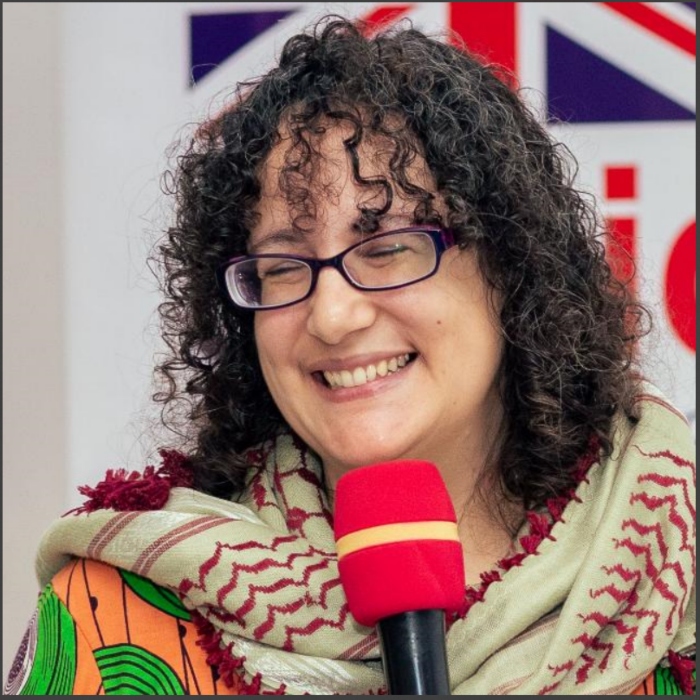
Lyla Adwan-Kamara
Disability and Mental Health Specialist
Lyla Adwan-Kamara is an Atlantic Fellow for Social and Economic Equity and a Disability and Mental Health Specialist who has 25 years experience in multi-disciplinary approaches in research, participation, and creative techniques for people to express themselves and to lead. She is currently the Project Manager for an AFSEE-funded research project that focuses on exploring collaboration between disability justice and inequality activists in Ghana and Kenya.
Image credits: Photo by Comme Lab Studios