
Oxfam’s latest annual world inequality report documents how the world’s 3,000 or so billionaires increased their collective fortune by $2.5 trillion in 2025 – a sum that could eradicate extreme poverty 26 times over – while billions at the bottom end continue to go hungry. But beyond the problems inherent is such extreme economic inequality, Oxfam’s Carlos Brown Solà asks whether it is now increasingly clear that extreme wealth concentration is incompatible with a democratic society?
For over a decade, Oxfam has published an annual report on extreme economic inequalities to coincide with the World Economic Forum in Davos, where global elites gather to discuss the future of our societies and economies in a notably exclusive and non-democratic setting. A recurring theme in these reports has been how the wealthiest in our societies continue to grow ever richer, at the expense of the lives of billions of people around the world. Oxfam’s most recent annual report, ‘Resisting the rule of the rich: defending freedom against billionaire power’, shows that we have reached a new peak in the concentration of extreme wealth – posing urgent questions for the future of democratic society.
In 2025, despite economic and geopolitical turbulence, the combined fortunes of billionaires – some 3,000 people worldwide with a net worth exceeding one billion US dollars – grew three times faster than the average of the previous five years, reaching an all-time high of US$18.3 trillion. Last year alone, their fortunes increased by $2.5 trillion, an amount equivalent to the entire wealth held by the poorest half of humanity. Indeed, that sum would be enough to eradicate extreme poverty 26 times over. One multi-billionaire, Elon Musk, became the first person in history to surpass the half-trillion-dollar mark and now has a fortune of nearly $766 billion (as of January 2026), closing in on becoming the first ever trillionaire.
This phenomenon is not exclusive to the United States or Europe. Latin America and the Caribbean, for example, currently boast a record 109 billionaires with a combined wealth of US$622 billion, equivalent to the combined annual GDP of Chile and Peru. These Latin American fortunes, of which slightly more than half are the product of inheritances, grew by 39% in the last year alone. Over the last five years, the richest man in Latin America and the Caribbean today, Carlos Slim Helú, earned each second what the average Mexican earned in a week’s work.
But it’s not just that billionaires have accumulated more wealth than they could ever spend. It’s also becoming increasingly clear that the extreme concentration of their fortunes is incompatible with a democratic society.
This is in part because the majority of resources in our societies are in the hands of a few who decide how they are used. But it’s also because economic power allows them to be politically powerful. We hear about this every day – from governments that are run by and for the wealthiest that make decisions to deepen a system that only benefits them (such as tax cuts while working people pay ever more) to aspiring presidential candidates whose only merit is having inherited fortunes that they use to cultivate a favourable public image.
This is not a new phenomenon. But the pattern is becoming increasingly clear: how the decisions of a few individuals are increasingly shaping the economic and political “rules of the game” – a game that, by its very nature, has worked for them. The ultra-wealthy do this primarily in three ways: by buying political support, by investing in legitimising the power of the elites, and by guaranteeing themselves direct access to institutions. They are investing more and more money in elections and have greater control over the algorithms behind our newsfeeds and AI-generated content. Billionaires are also 4,000 times more likely to hold elected office than the average person. It’s one thing to buy a private jet or a mansion, but quite another to buy off a judge, a legislator, a social network or a newspaper.
In this way, governments end up siding with the wealthiest, prioritising the interests of big capital over the lives of billions of people around the world who not only remain in poverty or go hungry but also see their rights and freedoms increasingly repressed. In short, governments have preferred oppression over redistribution, which is worrying because while economic poverty produces hunger, political poverty breeds anger and fear, a central driver (and tool of) authoritarian and reactionary politics.
It doesn’t have to be this way. These economic and political inequalities are the product of choices, so changing course to build a fairer future depends on making different economic and political decisions that place people, communities, and nature at the centre. A growing political movement is demanding that governments drastically reduce economic inequalities, as well as curb the political power and influence of the ultra-wealthy. This is possible, for example, by effectively taxing their fortunes to reduce their economic power or by regulating lobbying practices and the algorithms that allow them to influence governments and societies.
It is urgent and necessary to resist the rule of the rich: to halt their growing power and influence and instead build a fairer economy while guaranteeing the future of our democracies. We can have extreme wealth concentrated in the hands of a few, or we can have democracy, but we cannot have both, as the US Supreme Court judge Louis Brandeis affirmed a century ago. The choice is ours: oligarchy or democracy?
This piece was first published on the LSE Inequalities Blog.
The views expressed in this post are those of the author and do not necessarily reflect the position of the Atlantic Fellows for Social and Economic Equity programme, the International Inequalities Institute, or the London School of Economics and Political Science.
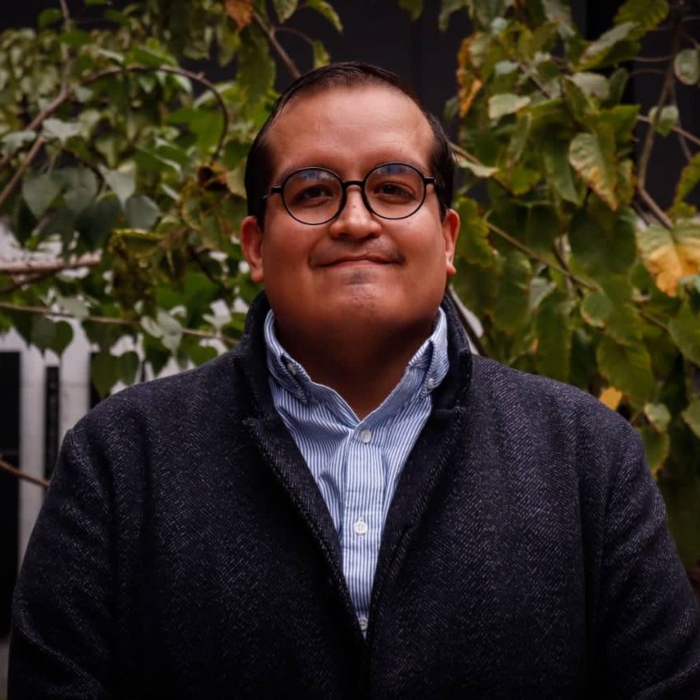
Carlos Brown Solà
Programme Director, Oxfam México
Carlos Brown Solà is an Atlantic Fellow for Social and Economic Equity and a Mexican political economist. He is currently the Programme Director at Oxfam México. Over the last decade, Carlos has worked to push for fiscal and economic justice in México and Latin America, from a human rights and inequalities perspective.
Image credits: Alphavector via Shutterstock.