
When the Atlantic Fellows for Social and Economic Equity announced its tenth cohort recently, I realised that I was marking a smaller anniversary of my own. Five years have passed since my cohort of 2021-22. It feels both recent and strangely distant. I entered the fellowship at a particular moment in my life, after nearly two decades of work and organising with civil society and people’s movements in India, and at a time when I was trying to work out what might come next.
I had moved from India to France shortly before the pandemic. Until then, much of my professional life had been shaped by movements – travelling, organising, campaigning, writing statements and reports, sitting through endless meetings, responding to crises, and being part of struggles around land, displacement, ecological justice and democratic rights through my work with National Alliance of People’s Movements. Movement life has its own rhythm and urgency, and for more than a decade I had lived within it as a whole-timer. By the time I moved to France, I was exhausted. There was distance now, geographical as well as personal, from the everyday organising that had defined my last decade. I was trying to understand whether stepping away from that particular form of activism also meant stepping away from the movements themselves, and what other forms my political engagement could take. Covid, Parisian winter and the year-long farmer’s struggles in India made it even harder being away.
AFSEE came into my life somewhere in the middle of that uncertainty, completely unplanned.
Looking back five years later, I feel fellowships are difficult to understand while you are actually doing them. There are courses, project work, conversations, people you meet, ideas you encounter and, eventually, a certificate saying that you have completed something. Some of these stay with you and some don't. In my case, I am not even sure that the fellowship year itself was the most consequential part of being an AFSEE Fellow. Much of what I remember and feel grateful is what happened afterwards.
Over these five years, AFSEE has become a space where I have repeatedly returned to questions that were already present in my life and work: How do movements nurture another generation of leadership and build power? Whose activism gets recognised and whose remains invisible? How do we document knowledge produced through struggles without separating it from the people who produced it? How does someone who has spent years organising begin to sit back, reflect and write about those experiences? And perhaps, underneath all of these, there was a more personal question I was still working through: how do you remain part of movement life when your own role within it is changing?
From a cohort to a community
One of my engagements after the fellowship year was through an Incubation Lab with other Senior Fellows. I used that space to return to a question that had followed me from my years of movement organising: how do social and climate justice movements nurture the next generation of leadership? This was a continuation of my non-residential fellowship project, where I had studied the pedagogy practices of the civil society organisations in India and South Africa on training next generation of leadership. The lab created a broader network of Fellows working on climate justice across the global Atlantic Fellows community.
In another ongoing Incubation Lab, South Asia Activists Memory Project, we are exploring a different but related question: who gets recognised as an activist in the first place? Movements are often imagined as open, democratic spaces, but access to activism is also shaped by caste, class, race, language, education, social networks and the economic ability to sustain oneself while doing political work. There are also many people doing deeply political work who may never call themselves activists, or be recognised as such by others. The Lab has given us a space to explore these questions with people coming from very different contexts and political experiences in South Asia.
Something else has evolved through these engagements over time. My first point of identification with AFSEE had naturally been my cohort. Over time, the Incubation Labs and other programmes have helped create relationships across cohorts. Many of us have begun collaborating with Fellows we had never known during our fellowship year, encountering movements and political histories from places quite distant from their own experience. Gradually, the cohort has become less important as the boundary of belonging. What began as a fellowship cohort has now become a much wider community.
Finding other ways of doing political work
This period also coincided with my own search for different ways of remaining politically engaged. I was no longer organising every day in the way I had done in India, but the questions and commitments that had shaped those years had hardly disappeared. What changed was the form through which I could engage with them.
The Academic–Practitioner (AcPrac) Collaboration became one such space. I returned to a reflecting on my collaboration with an independent Hindi publisher and cultural activist with whom I had worked for last few years since pandemic on editing three books, two on Narmada movement and one on a decade of the Arab Springs. Much of that earlier work had happened organically through publishing, translations and largely out of shared political commitments. The AcPrac project gave us an opportunity to stop and ask what all of that actually meant. In some ways, it allowed us to make meaning out of actions that had felt quite ordinary while we were doing them.
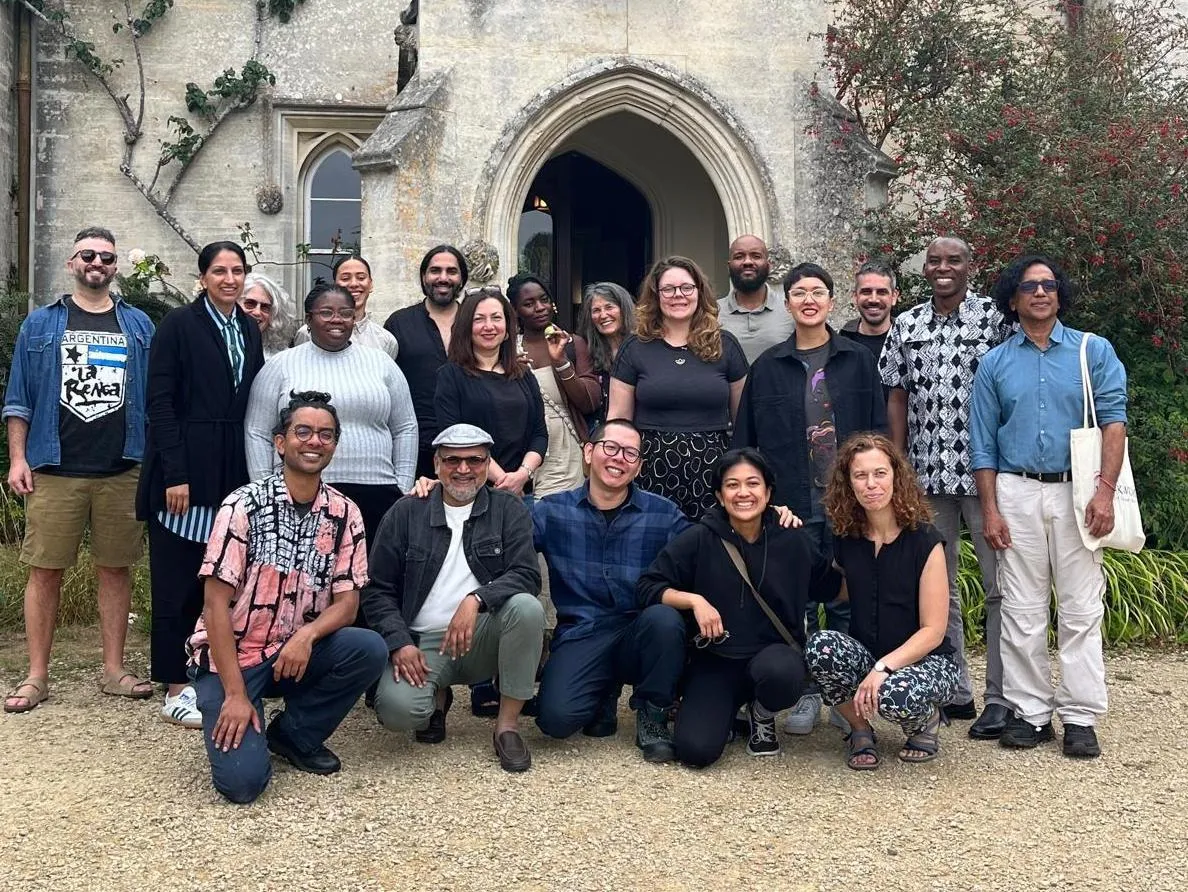
The writing retreat at Hawkwood opened another door. I had been writing for years – articles, movement statements, reports, policy pieces, columns – yet I had never quite thought of myself as a writer. Writing had mostly been something I did in the service of organising. At Hawkwood, working alongside other Fellows, AFSEE team, resource persons and advisors, I began experimenting with a more personal and creative form of writing and found my gaze and gained confidence.
These experiences have made me think about how people working for social change evolve over time. We often speak about sustaining movements, organisations and campaigns, but perhaps we pay less attention to sustaining the people within them. Someone who has organised for years will not necessarily contribute in the same way in the future. There have to be spaces where one can reflect, learn, write, mentor, experiment and sometimes simply rediscover one's relationship with the work.
For me, this is one of the things AFSEE has gradually become. It has provided different entry points at different moments, without requiring that every Fellow follows the same path. I could arrive with a question from movement organising, return later with a question about activism itself, explore an old collaboration through a new lens, or discover another way of writing. None of these experiences on its own defines the five years, but their cumulative effect does.
What remains after the fellowship
Over time, my relationship with AFSEE has also changed and continues to grow through different spaces it facilitates. Becoming a programme Ambassador was important in that sense. I was now reaching out to potential Fellows, speaking about the programme and encouraging people from South Asia to apply. It brought a different sense of responsibility. You begin as someone receiving an opportunity; gradually, you also begin thinking about what you can contribute to the community that made that opportunity possible.
That change has made me think more about what we mean when we talk about the impact of a fellowship. Some outcomes are easy to record – projects completed, articles written, collaborations supported, gatherings organised. Five years later, I find the less visible ones equally important. An activist or organisation I encountered through another Fellow. A collaboration that emerged across cohorts. The confidence to attempt a different kind of writing. A conversation that made me look differently at work I had been doing for years. These connections don’t appear in an impact framework, and yet they can shape what we do next.
Perhaps this is also why I have valued AFSEE's willingness to experiment. Incubation Labs, writing retreats, academic–practitioner collaborations, Ambassador roles, participate in conferences, organise convenings, and several other available opportunities – these create different ways for Fellows to return to the community as their lives and work change. I have particularly appreciated the attitude I have encountered when taking an idea to the AFSEE team: let us see if we can find a way. Institutions need rules and structures, of course, but they also need enough openness to allow unexpected things to happen.
As AFSEE enters its tenth year, I hope it continues to protect that quality. Ten years inevitably brings reflection about what has worked and what needs to change. There is value in reviewing and adapting, while also recognising what has accumulated over a decade – relationships, trust, institutional memory and a community spread across countries, professions, movements and generations. New experiments can grow from that foundation.
And to the Fellows of Cohort 10, perhaps the one thing I can say after five years is this: you probably don't yet know what this fellowship will become for you.
Some parts will be visible immediately. Others may seem peripheral now and become important several years later. People you meet during the fellowship may disappear from your everyday life and return unexpectedly as collaborators. An opportunity may allow you to revisit an old question, discover another way of working, or recognise something in yourself that you had never quite named before.
So enter the fellowship fully, but leave some room for surprise.
Five years ago, I entered AFSEE while trying to understand what might come after nearly two decades of movement organising. I still don't think I have a final answer to that question, and perhaps I no longer need one. I have found different ways of continuing – organising in other forms, writing, reflecting, building collaborations, mentoring, supporting movements and learning from people whose journeys are very different from mine. And AFSEE played a big role in it.
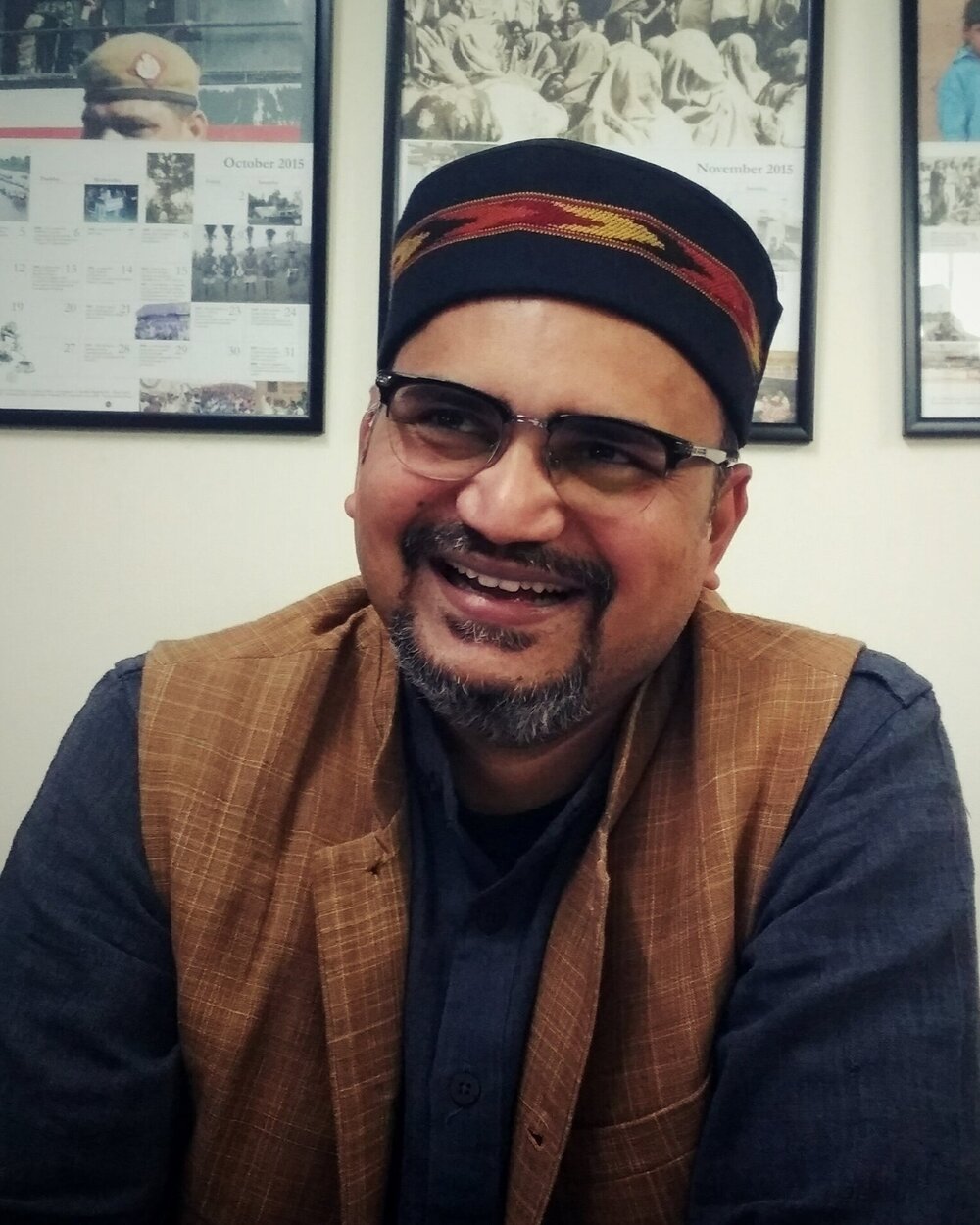
Madhuresh Kumar
Climate Justice Activist and Researcher
Madhuresh Kumar is an Atlantic Fellow for Social and Economic Equity, an Indian climate justice activist-researcher based in Paris, and a Resistance Studies Fellow at the University of Massachusetts, Amherst. His work currently focuses on building the next generation of leadership within the climate justice movements for rapid fossil-fuels phaseout and developing just, decentralised alternatives and movement networks to tackle the climate crisis.
Image Credit: Dan Meyers via Unsplash