
As the multilateral system confronts one of its deepest crises of legitimacy, resources, and trust, the United Nations stands at a crossroads. The selection of its next Secretary-General is more than a procedural transition; it is a test of whether the organisation is ready to lead differently. Appointing a woman for the first time, grounded in the principles of feminist diplomacy, would not simply correct a historical imbalance but redefine global leadership itself, embedding equality, sustainability, and cooperation at the heart of multilateral renewal.
The United Nations was born from the ashes of conflict and built on ideals of peace, cooperation, and shared prosperity. Yet today, the system faces a deep legitimacy and resource crisis. The current UN Secretary General, António Guterres, is implementing unprecedented budget cuts, pushing the organisation toward austerity and efficiency at a time when global inequalities and conflicts are rising.
These are not easy times for multilateralism, but these are precisely the moments when leadership matters the most. The UN needs leadership capable of restoring cooperation and re-imagining what collective governance can achieve. This is why the campaign for a woman to become the next UN Secretary-General has taken on new meaning. It is not simply about representation. It is about redefining what kind of leadership the UN needs in order to recover its sense of purpose.
Why feminist diplomacy matters
Feminist diplomacy is not a slogan. It is a political practice that puts equality, sustainability, and care at the centre of decision-making. It recognises that the personal is political and that gender inequality is not a marginal issue, but a systemic obstacle to development, peace, and democracy.
When it comes to gender inequality, the data does not lie. Globally, women make up around 40% of the labour force, but according to UN-WOMEN, only 40% of formal employment and less than 25% of management positions. In Latin America, the gender wage gap exceeds 20%, and women devote, on average, three times more hours than men to unpaid care work.
These figures are not just moral failures; they are economic inefficiencies. When countries adopt Feminist Foreign Policies (FFP), it has a positive impact on gender equality across sectors: greater participation of women in innovation, trade, and exports, more resilient economies, and stronger democracies. Chile, for example, was the first country in South America to adopt FFP in 2023. Since then, women-led exporting companies have grown by over 50%, and companies that have implemented new policies on care and work-life balance show higher productivity and talent retention. These outcomes prove that equality is not only fair but also good for the economy.
‘Globalising equality’, therefore, means embedding a gender lens across the full spectrum of global governance: trade agreements, fiscal policy, infrastructure investment, and care systems. It means asking how every decision, on technology, energy, or migration, affects women and men differently, and ensuring that women are not an afterthought but a driving force in shaping solutions.
Without women’s full participation in the economy, recovery will never be complete or resilient. Without women’s leadership in diplomacy, peace processes lose depth and legitimacy. And without feminist perspectives in environmental and economic governance, the transition to sustainability will remain incomplete.
A unique opportunity for the United Nations
In November 2025, the United Nations formally initiated the selection process for the next UN Secretary-General, inviting nominations from its 193 member states. This is a historic opportunity for the UN to bring forward a leader capable of embodying the principles of feminist diplomacy, and of steering the organisation through the challenges of austerity, climate crisis, and social fragmentation.
Two candidates have been nominated so far: Argentine diplomat and Director General of the International Atomic Energy Agency, Rafael Grossi, and former Chilean President and UN High Commissioner for Human Rights, Michelle Bachelet. Bachelet was jointly nominated by Chile, Brazil, and Mexico, emphasising her track record in democratic leadership and multilateral diplomacy.
In her nomination letter, Bachelet highlighted how we are living through a moment of profound global transformation, where conflict, mistrust, and technological disruption test the very foundations of our shared future. In this context, she envisions a United Nations renewed in purpose and courage, one that serves as 'the prism that allows us to distinguish the many colours of the nations that make up humanity,' guiding the world back to cooperation, dignity, and peace. As the letter emphasises, Bachelet brings with her not only a lifelong commitment to equality, but also experience of navigating power with integrity, expertise, and conviction. In her career so far, she has led reforms that expanded women’s rights, strengthened democracy, and advanced social protection systems.
In times of uncertainty, the world needs leaders who can inspire trust and cooperation. Bachelet’s leadership is the kind the UN needs now, grounded in rights, open to dialogue, and able to bridge divides in an era of global mistrust. Choosing a woman, and particularly a Latin American woman, at the head of the United Nations, would send a powerful message to the world that the renewal of multilateralism depends on inclusion, not exclusion, on empathy, not dominance and on cooperation, not competition. It would also remind us that diplomacy can still be a force for peace, equality, and shared prosperity.
As the campaign gains momentum, the question is not only whether the world is ready for a woman to lead the UN, but whether the UN is ready to lead differently.
The views expressed in this post are those of the author and do not necessarily reflect the position of the Atlantic Fellows for Social and Economic Equity programme, the International Inequalities Institute, or the London School of Economics and Political Science.
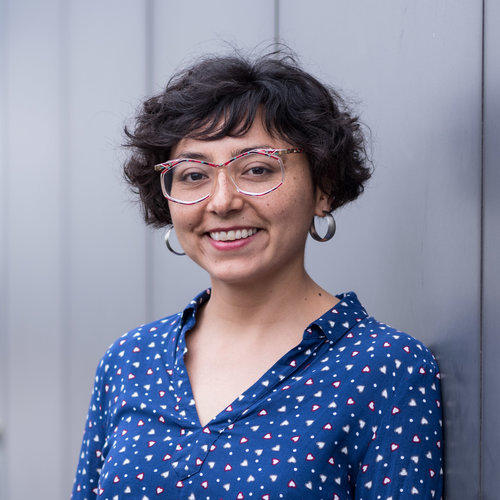
Anita Peña Saavedra
Head of International Relations at the Ministry of Women and Gender Equality, Government of Chile
Anita Peña Saavedra is an Atlantic Fellow for Social and Economic Equity, a public policy expert, a feminist advocate, and the Head of the International Relations Department at the Ministry of Women and Gender Equality at the Government of Chile, where she focuses on the intersectional factors that intervene in gender inequality.
Banner Image: Photo by Mathias Reding on Unsplash