
The theme of this year’s International Women’s Day (IWD), ‘Give to Gain,’ is both a call for solidarity and a reminder of our shared responsibility. Progress for women does not happen in isolation; it requires collective effort to ensure that women everywhere continue to gain rights, protection, and justice. Yet too often, global conversations about women’s empowerment overlook those living on the margins, particularly refugee and displaced women.
Although international and domestic conventions, treaties, and policies aimed at protecting and empowering women and girls are increasingly adopted across the globe, the distance between international commitments and the lived realities of refugee women remains vast. Policies may acknowledge their vulnerability, but they rarely create meaningful space for refugee women to speak for themselves or shape the decisions that affect their lives. As a result, change often begins not in global forums but within refugee communities themselves, where women quietly build networks of support, resilience, and leadership.
Through my work as a refugee advocate in Malaysia, I have witnessed young Rohingya refugee women continually inspire and empower each other to overcome barriers to equity. These encounters have demonstrated to me the power of solidarity and the urgent need to connect these localised networks of support with the international conversations on women’s rights.
The Hidden Struggles of Rohingya Women
The Rohingya, a population of roughly 1.5 million people, have lived in Rakhine State on the western coast of Burma (now Myanmar) since the 15th century. They lived under British colonial rule for more than 120 years until Myanmar gained independence in 1948. Then, after a military coup in 1962, a Burmese military dictatorship took control of the country and systematically stripped the Rohingya of their rights. They were denied citizenship and officially rendered stateless, excluded from legal residence, healthcare, education, employment, social security, and freedom of movement.
As repression intensified, the Rohingya people began fleeing Myanmar in search of safety. However, it was not until 2017, when repression turned to genocide, that hundreds of thousands were forced to escape the country, creating one of the world’s largest refugee crises. The journey to safety and freedom has been incredibly difficult for all Rohingya, but it has been even harder for those already marginalised among them, particularly women. For Rohingya women fleeing Rakhine State, displacement rarely begins from a place of equality. Many arrive in foreign lands already burdened by layers of injustice and discrimination, as a significant number are child brides, teen mothers, or survivors of sexual violence.
In refugee settings, the vulnerability of these women and girls can deepen. Despite cultural and religious values that emphasise dignity and protection, social pressures often silence survivors of sexual and gender-based violence. Within tightly bound communities, many women feel compelled to conform for fear of bringing aib, dishonour, to their families or communities. Yet even in the midst of such hardship, moments of transformation can occur.
The Role of Collective Solidarity
Sometimes, transformation can begin with something simple. One woman reaching out to another. When weary hands meet, and guarded eyes find understanding in another woman’s gaze, hope can begin to grow. In those moments of empathy and solidarity, free from judgment, women create space for each other to imagine new possibilities. It is not about saviours or saints. It is about women supporting women. Through these connections, a woman can discover or rediscover her agency, that her thoughts, beliefs, and voice matter. She can begin to understand that her ideas deserve recognition, that her body deserves dignity and autonomy, and that her potential for knowledge and growth does not end in childhood.
However, across South and Southeast Asia, safe spaces for women are limited. For Rohingya refugee women and girls, they are even rarer, because they are often not legally recognised as refugees in neighbouring countries, such as Malaysia and India. Yet within these small pockets of safety, remarkable change takes root. These spaces are often built by women who dedicate their time, skills, and compassion to dismantling the barriers that refugee women face. For example, the Rohingya Women Development Network in Kuala Lumpur, Malaysia, has dedicated the last ten years to empowering Rohingya women and girls through income-generating projects. Through these types of initiatives, as well as education, advocacy, and community support, I have witnessed how women help each other in restoring confidence, independence, and hope.
The Ripple Effect of Women’s Empowerment
When a woman is empowered, socially, economically, and emotionally, the impact extends far beyond her own life. She gains the ability to support and protect her family, especially her children. This transformation can be both liberating and catalytic.
Over the past decade, the Rohingya community has begun to witness this shift. Young Rohingya girls are finding opportunities to learn, to lead, and to shine on global platforms, made possible by the countless individuals who have chosen to give. The story of women’s empowerment is, at its heart, a cycle. Women give their knowledge, time, and solidarity so that other women may gain confidence, rights, and opportunities.
This cycle continues across generations. And the only way to sustain it is to ensure that no woman, regardless of where she was born, where she lives, or where she has been forced to flee, is left behind. Because when women give to each other, the gains ripple far beyond one life. They shape communities, strengthen futures, and move the world closer to true equality.
The views expressed in this post are those of the author and do not necessarily reflect the position of the Atlantic Fellows for Social and Economic Equity programme, the International Inequalities Institute, or the London School of Economics and Political Science.
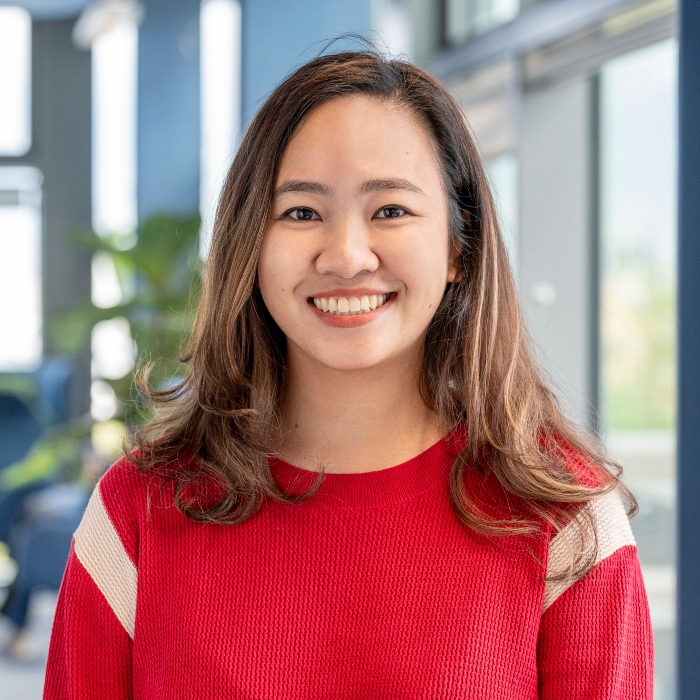
Nik Nasha Damia
Advisor, Rohingya Women Development Network
Nik Nasha Damia is an Atlantic Fellow for Social and Economic Equity and a refugee rights advocate and an advisor for the Rohingya Women Development Network (RWDN) in Malaysia. She is also the founder of NASHPOTATOES, a social enterprise empowering marginalised youth, the stateless, abandoned child brides and mothers, urban poor, refugees, and orphans in Malaysia with arts and crafts.
Banner Image: Photo by john crozier on Unsplash