
Ghana’s recent debt crisis reveals how fiscal policy decisions shaped by creditor priorities can erode the basic rights of vulnerable citizens, undermining their dignity and everyday survival. Debt restructuring and austerity measures have disproportionately shifted the burden of crisis onto the most marginalised, deepening existing inequalities. This underscores the urgent need for a new approach to sovereign debt—one that places human dignity, justice and accountability at its core.
In global economic discussions, sovereign debt is often approached from a macroeconomic perspective with emphasis on indicators such as the debt-to-GDP ratio, debt sustainability assessments, credit ratings and fiscal stability. However, for millions of citizens in the Global South, especially African countries, sovereign debt is not an abstract economic concept. For them, it is a lived reality that determines whether they have food to eat, whether they can afford healthcare or not and whether young people are able to hope for a brighter future.
In my research, I look at Ghana’s experience between 2022 and 2025 and how this offers insights into the human cost of debt restructuring, especially among the most marginalised communities. Following a debt default in 2022, Ghana became the fourth African country after Chad, Zambia and Ethiopia to restructure its sovereign debt under the G20 Common Framework. However, unlike the three other countries, Ghana’s restructuring involved a large domestic exchange – the Domestic Debt Exchange Programme (DDEP).
In restructuring domestic bonds, the DDEP directly triggered losses on savings that had been accumulated over decades borne by ordinary citizens. Some of the most affected citizens were pensioners who had invested on government bonds as a safe and patriotic move. The restructuring process not only affected retired government employees’ pension funds but also ordinary insurance policy holders. In addition, however, the broader economic hardships that followed were shaped by the fiscal consolidation measures introduced in the aftermath. So, whereas the DDEP created the initial financial shock, the fiscal consolidation deepened the everyday pressures facing people up and down the country, and vulnerable communities especially.
How the G20 Common Framework deepens inequality
The G20’s debt architecture is built on the assumption that fiscal consolidation is a pathway to economic stability. As such, governments end up cutting their spending, raising taxes and contracting imports to restore fiscal balance. Ghana’s experience shows how austerity disproportionately affects the most marginalised citizens. The imposed cuts to health and education budgets, delays in public sector wages, public sector job freezes and regressive taxes such as the E‑Levy all exacerbated existing structural inequalities. Meanwhile, rising prices hit the poorest hardest, and plunged informal workers into uncertainty due to a shrinking job market.
In a widely reported statement, President John Dramani Mahama – who at that time was serving as Ghana’s Opposition Leader – linked the death a prominent businessman (Dr Michael Agyekum Addo) and other pensioners to the economic hardship and psychological distress associated with the DDEP. He characterised the programme as a 'cruel and heartless policy' that imposed needless suffering on citizens who had entrusted their life savings to the state. His remarks intensified public debate around the fairness, timing, and execution of the DDEP, and renewed calls for stronger social protections during major economic policy shifts.
My research examined how these macroeconomic decisions translated into the lived experience of ordinary Ghanaians, drawing on 20 in‑depth interviews with pensioners, women working in the informal sector, young people both employed and unemployed and individuals from sexual and ethnic minority groups from Accra, the Central Region and the Cape Coast. The analysis shows that, as is common in times of crisis, the burdens of Ghana’s restructuring were felt most sharply by marginalised communities.
Women from both urban and rural areas were forced to absorb the economic shocks through unpaid care work, supporting their extended families while sacrificing their own needs. A woman living in Kumasi shared her struggles: 'My life is a constant balancing act of caring for my nine siblings and aging parents, supporting the queer community around me, and trying to hold myself together amidst the weight of mental health struggles. Even before the debt restructuring, things were tight. But now? Inflation has drained the life out of even the most basic needs. Basics such as food, transport, healthcare have become luxuries. I often eat just once a day trying to stretch the little [I have]'.
Young people reported lost opportunities, having to put on hold their education and general hopelessness as the job market shrunk. 'My dreams of sustainable development studies in Germany faded as the Euro exchange rate skyrocketed. My required 10,000 euros, once around GHS 60,000, became over 200,000. That wasn’t just money. It was my future', shared one participant.
These stories show how debt crises deepen gendered, generational, spatial, and economic inequalities. Across interviews, people described chronic anxiety, emotional exhaustion, and a growing sense of hopelessness. Many of them felt personally responsible for a situation far beyond their control. As such, this emotional burden –about which economic development debates remain largely silent – adds to the disproportional burden carried by women, first‑born children, and marginalised groups. By contrast, private creditors were in a better position to negotiate their losses, prompting serious questions about the legality and morality of such a system.
Under the International Covenant on Economic, Social and Cultural Rights (ICESCR) and the African Charter on Human and Peoples’ Rights, states have an obligation to protect citizens’ rights to health, education, social security, and an adequate standard of living even during economic crises. However, the G20 Common Framework in its current form does not provide for human rights impact assessments, social safeguards or a framework to ensure that the most vulnerable citizens are protected. Because of this, debt restructuring processes end up violating the same rights that states are bound to uphold.
A call to put human dignity at the centre of debt reform
The Ghana case is a stark reminder of how the absence of rights-based safeguards in economic policy decisions disproportionately affects citizens living on the margins of society. It highlights the flaws of the current debt architecture, which prioritises macroeconomic metrics over the wellbeing and human dignity of citizens.
As such, eradicating inequality remains a pipe dream in a world where such an unfair debt system exists. But an inclusive and fair architecture could be built: one which ensures that human rights are at the core of all debt negotiations, which protects social spending on key services (such as health, education and social protection), which includes citizens in the decision-making process and which ensures burden sharing between borrower countries and the creditors. The hope, then, is that Ghana’s experience provides an opportunity to advocate for a new framework centred on the lived reality of citizens, especially the most vulnerable, that is anchored on human dignity, justice and accountability.
This piece was first published on the LSE Inequalities Blog.
The views expressed in this post are those of the author and do not necessarily reflect the position of the Atlantic Fellows for Social and Economic Equity programme, the International Inequalities Institute, or the London School of Economics and Political Science.
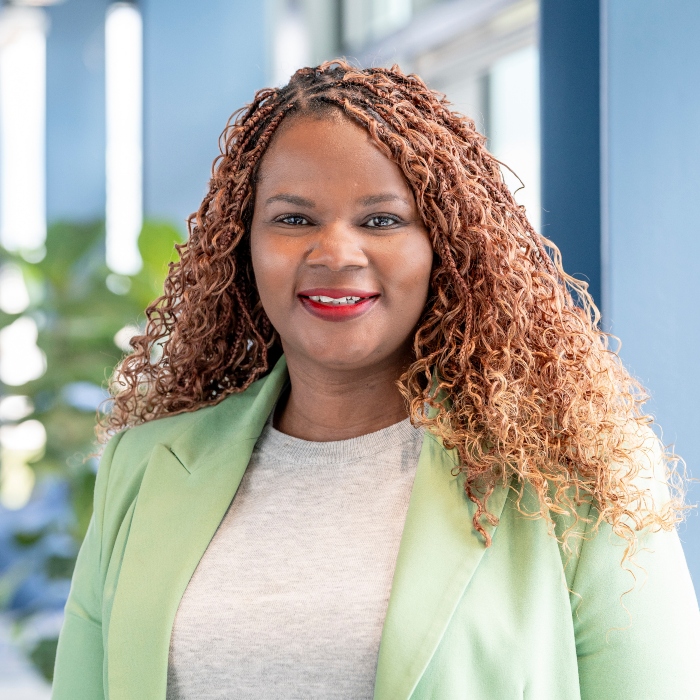
Lucia Makamure
Operations and Programme Quality Lead, International Development Economics Associates (IDEAs)
Lucia Makamure is an Atlantic Fellow for Social and Economic Equity and a fiscal justice campaigner and a gender expert with over 15 years of experience in gender and fiscal justice, spanning across national, regional, and global civil society organisations. She is currently the Operations and Programme Quality Lead at the International Development Economics Associates (IDEAs).
Banner Image: Photo by 26daysoff via Shutterstock