
El Salvador’s State of Exception, originally framed as a temporary response to gang violence, has evolved into a long-term measure with severe consequences. The consequences have led to human rights violations against an unprecedented number of detainees, who suffer exclusion and stigma, along with the impact endured by their families, particularly women relatives. Fátima Pacas argues that they have become unrecognised victims of a policy justified in the name of public security.
El Salvador’s State of Exception
In late March 2022, El Salvador faced one of the deadliest weekends in its recent history. Between 25 – 27 March, 87 people were murdered, with 62 homicides occurring on 26 March alone. In response, President Nayib Bukele, backed by the Legislative Assembly, enacted a State of Exception decree. Presented as a short-term emergency measure to dismantle gang structures, the decree suspended key constitutional rights, including freedom of assembly, the right to legal defence, and protection from arbitrary detention.
Initially justified as a necessary step to restore public safety, the decree has now become a long- term tool. Since its implementation, the State of Exception has been extended more than 44 times, transforming it from a temporary security measure into a permanent rule. As of January 2026, it continues to operate without a clear end date or transparent criteria for its renewal. This prolonged state of emergency has drastically eroded judicial independence and normalised not just the suspension of fundamental rights but also mass detentions (exceeding 80,000 individuals according to official data), raising serious concerns about due process and human rights violations. While the government promotes these actions as evidence of a successful crackdown on crime, the policy has generated severe and uneven consequences across the population.
One alarming consequence is the rise of inequality and injustice. A 2024 report by the Inter-American Commission on Human Rights details how policymakers and government officials in El Salvador have systematically excluded and discredited the perspectives of diverse social actors. Academic institutions, unions, investigative journalists, grassroots movements, nonprofit organisations, and international bodies have all been sidelined in the decision-making and evaluation processes of the government.
Most critically, the government has targeted and delegitimised the voices of detainees’ families, a majority of whom are women from economically disadvantaged communities. These women are often stigmatised as complicit or dangerous, simply for seeking justice, information, and due process for their loved ones. As a result, they are excluded from public debate, denied institutional support, and rendered invisible by official narratives.
These families have become 'collateral damage' in a security social policy discourse that privileges control over care. Their emotional, social, and economic suffering is dismissed not only by the state, but also by a society conditioned to see them as suspicious. Far from being recognised as victims, they are treated as extensions of the threat that the policy seeks to eliminate.
Security Gains and Democratic Losses
Although public surveys in the country report that people feel safer due to the decline of gang control in their territories, this perceived sense of security is uneven. There is no doubt that in neighbourhoods once dominated by gangs, violence directed by gang members has decreased. However, the reduction of gang influence has been overshadowed by the growing power of the State’s repressive apparatus, which has produced state violence, eroded the judicial system, and virtually eliminated due process. Additionally, impunity has been normalised while the families of detainees have been stigmatised, further excluding them from public dialogue and recognition.
Unequal Impacts on Communities and Families
The most troubling consequence of the State of Exception is its reinforcement of existing inequalities. Poor communities, particularly those with a long history of organised leadership, such as El Bajo Lempa in Usulután, Guarjila, Guancora in Chalatenango, and Santa Marta in Cabañas, among many others, have been disproportionately affected. Families from these areas, who often advocate for justice and due process, lack the legal, linguistic, and informational resources needed to effectively articulate their suffering and expose, at both the national and international levels, the injustices they endure. This inability to make their experiences visible results in their voices being sidelined in policy discussions and public discourse. Those who dare to speak out against these injustices are frequently criminalised and further marginalised, reinforcing the structural exclusion that has plagued their communities for generations. This is a clear manifestation of epistemic injustice: victims’ testimonies are not believed, their suffering and pain is not acknowledged, and their lived realities are dismissed, often framed as the consequence of their association with those accused of criminal activity.
Salvadorian population and leaders must recognise that, in the midst of the 'war against gangs', unintended civilian casualties have increased. In the pursuit of security, innocent people, mainly poor citizens, have become the unacknowledged victims of the State of Exception. These are human beings who are suffering, yet their pain is portrayed as an unavoidable side-effect of security. In reality, it is a political choice whether to assess the impacts of the decree, identify abuses, and implement necessary reforms to recognise those affected.
Among the most vulnerable are the children of detainees left without food or protection, the elderly abandoned without care, women struggling to feed their families, and individuals detained under false accusations or subject to abuse. It is essential to acknowledge that those Salvadoran citizens are entitled to specific rights and protections. This includes providing comprehensive psychosocial support, legal aid, and access to economic resources to help families rebuild their lives. It also requires actively involving them in truth-seeking and reconciliation processes, ensuring that their voices are heard and their experiences acknowledged both in the judicial system and in public discourse. Equally important is a fundamental shift in the public narrative to humanise the victims of the State of Exception. Rather than ignoring them or reinforcing discourses that criminalise and dehumanise those who suffer under this law, their stories must be highlighted, their voices amplified, and their rights to justice and recognition actively defended.
The views expressed in this post are those of the author and do not necessarily reflect the position of the Atlantic Fellows for Social and Economic Equity programme, the International Inequalities Institute, or the London School of Economics and Political Science.
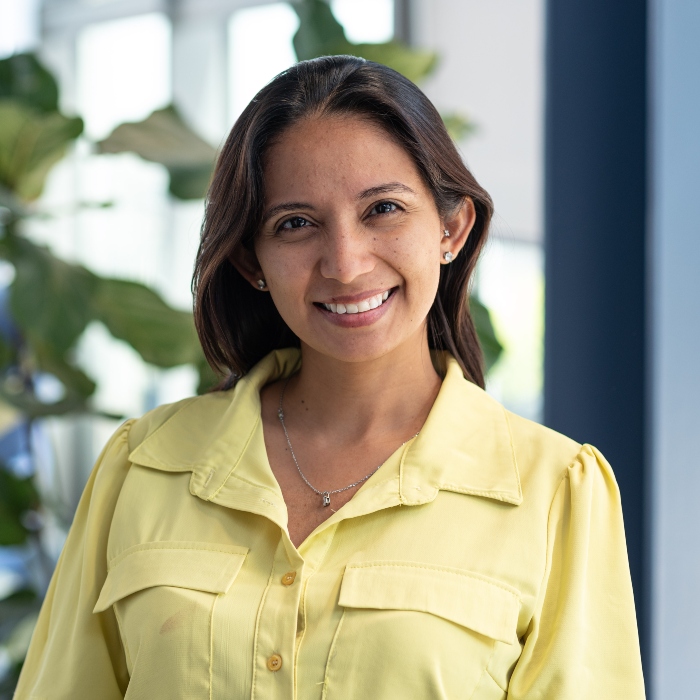
Fátima Pacas
Sociologist & Human Rights Defender
Fátima Pacas is an Atlantic Fellow for Social and Economic Equity and sociologist with more than twenty years of experience working in the nonprofit and social justice sector in Central America and the Caribbean. Her work has focused on strengthening grassroots organising, promoting human rights education, and supporting collective action in contexts of inequality, violence, and democratic erosion.
Image credit: Oswaldo Martinez via Unsplash