
Experiencing burnout can feel overwhelming and quite lonely, and common self-care solutions tend to place the burden of addressing burnout on the individual. A cup of hot chocolate or meditation might bring temporary relief, but it won’t address the structural drivers of injustice which are inherently linked with activist burnout. This blog examines some of the drivers of activist burnout and asks, what can be done about them?
Understanding burnout as a political, not individual matter
Burnout is most commonly understood as a workplace phenomenon. A lot of the workplace factors that maintain and uphold standards of burnout thrive on using human motivation and emotion against individuals, tiring us out with ever-changing standards and cycles, and bureaucratic battles that wear down on individual energy while larger systems remain untouched.
Meanwhile, within activist spaces, burnout looks like the unrelenting pressure of trying to constantly change things for the better and fighting against not just a lack of change, but also a constant attempt to roll back people’s rights. Burnout becomes particularly trying in spaces where our organisations or institutions become the focus of our activism. We respond not just to injustice, our natural motivator as activists, but also to hypocrisy. Burnout, then, is what happens to the mind and body when there is a mismatch between the way we feel our lives, institutions, and the world ought to be; the way they often claim they are; and how they are in reality.
Some of what burns us out is the failure of the movements or institutions we’re in to live out their values. So many of us have been conditioned to be polite, to hide our anger, to avoid saying ‘no’. In exposing their hypocrisy, institutions treat us as troublemakers instead of problem diagnosers. Some of us end up tone policing each other, instead of uplifting each other - but since when did asking nicely lead to justice or liberation?
'You’re too emotional,' 'you’re angry,' and 'you’re too sensitive' – when no one is shouting, cussing, or being disrespectful, but merely sharing a critical thought – these are all tools for silencing. Priscillia Kounkou Hoveyda, Atlantic Fellow for Racial Equity
Within activist spaces, disabled people are often not viewed as political beings, or are seen as self-advocates rather than activists. This is part of the same medical model thinking that individualises disability to something medical to be overcome through personal effort rather than as a set of social structures that can only be changed collectively. We see the same thinking around definitions of burnout. The World Health Organisation has added burnout to the International Classification of Diseases: “Burnout is a syndrome conceptualized as resulting from chronic workplace stress that has not been successfully managed.” This individualised conceptualisation reduces us to mere units of production.
Indeed, cultures and environments of working often co-opt the language of mental health, weaponizing emotional responses as being 'unfit' for the workplace and creating barriers to solutions using channels of politeness. Institutions often shirk responsibility for the humans that make up our system by focusing on self-care.Matthew Batson, Atlantic Fellow for Racial Equity
Addressing burnout in community with others
Atlantic Fellows for Palestine is a Fellows-led community collective which has been in dialogue with Atlantic Institute since 2023, exploring what notions of equity, justice and solidarity look like in today’s world. This collective, which formed in 2023, includes Fellows from all 7 Atlantic Fellows programmes. It works to build solidarity across programmes and movements. In addition to direct engagement, and collective and individual writing and organising efforts, Fellows have hosted a series of eight ‘courageous conversations’ webinars so far. Speakers have included Fellows, activists, researchers and more. These 'courageous conversations’, both internally and externally facing, have sought to understand our experiences as change-makers within institutions that struggle to change, and explore the wider implications of what it means for all of us when live-streamed genocides carry on with impunity.
In October 2025, Fellows across different global programmes, external speakers and attendees convened to talk about burnout across different fields of activism. The webinar explored what is really happening to us when we feel that we can’t carry on, and how to find a path forward. This blog seeks to build on these themes, and to continue the ongoing dialogue about what activist solidarity and sustainability look like.
For many people within the global majority, a history of violence and oppression was used to establish our current systems, including capitalistic, patriarchal and colonial structures. When systems are built on and continue to perpetuate harm, it is important to ask ourselves, what radical changes are necessary to create healing environments? It becomes increasingly important to address the cultures we inherit. Within a context that often uses scarcity and fear as primary motivators, people find themselves following convoluted, hierarchical structures to address issues, aligning with corporate politeness to survive. To find a collective way forward, addressing these harmful cultural ideas must become a priority.
Solidarity and community are powerful forces for building bridges and supporting the work of activists who often find themselves up against systems or institutions that make them feel powerless in the face of such a big entity. Earlier this year, the AFSEE (Re)Building Solidarity Incubation Lab hosted a session with other Atlantic Fellows exploring the meaning of solidarity together, highlighting it as an embodied and community experience. True solidarity brings with it a sense of connection, safety and joy; it creates a framework of community support that allows people to feel safe enough to truly rest, recover and live.
Importance of joy and creativity
Community and individual creativity or play is a key tool in not only addressing individual burnout but also in igniting joy, passion and hope for a future that can be different from our current reality. Play is a powerful – but often overlooked – tool in our everyday life. If we are lucky, our childhood was filled with rich and diverse opportunities for play. But as we grow, we are often taught to separate ourselves from this playful nature and to adapt to more mature environments. Yet it is this spark of human creativity that designed the very systems that shape our world – and this too must be the spark that charts a global way forward.
When we remember that we are surrounded by social constructs and inherited cultures, we can also reflect on how our world can be different. Creativity is a muscle – a skill that can be learned and practiced. Our everyday creativity allows us to solve problems, manage difficult situations, and express our inner world. We can return again and again to the art and practice of being creative, whimsical, and playful – the habit of imagination –as often as possible. In this photobook of activist reflections on burnout, we use this skill to imagine new realities, new futures, new possibilities, and to rage against the rigidity of systems that tell us ‘that's just the way things are’.
When I started doubting the value of my work and whether I should carry on, someone said to me that every action towards liberation, no matter how small, or for whom, was a valid and meaningful step. It really meant a lot to be held like that, and in the end, it gives us a hint about how to address burnout: in community with others, and not on our own.Lyla Adwan-Kamara, Atlantic Fellow for Social and Economic Equity
The views expressed in this post are those of the author and do not necessarily reflect the position of the Atlantic Fellows for Social and Economic Equity programme, the International Inequalities Institute, or the London School of Economics and Political Science.
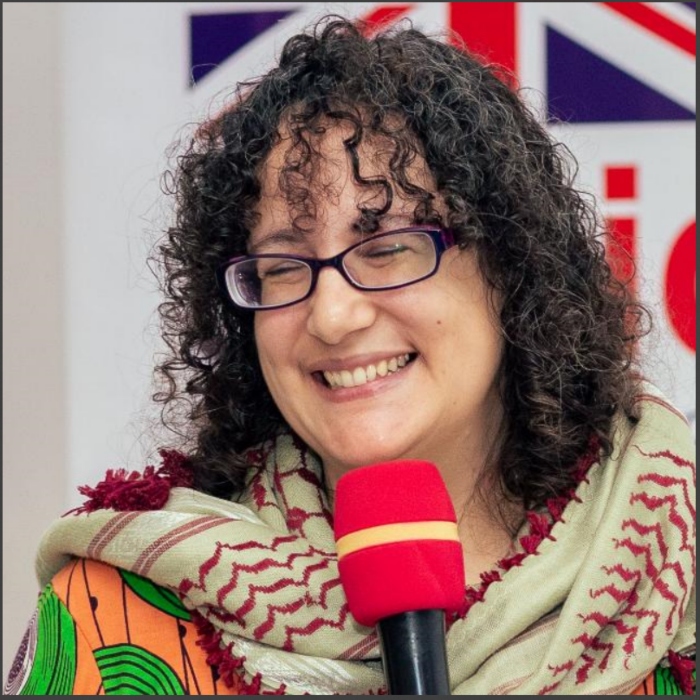
Lyla Adwan-Kamara
Disability and Mental Health Specialist
Lyla Adwan-Kamara is an Atlantic Fellow for Social and Economic Equity and a Disability and Mental Health Specialist who has 25 years experience in multi-disciplinary approaches in research, participation, and creative techniques for people to express themselves and to lead. She is currently the Project Manager for an AFSEE-funded research project that focuses on exploring collaboration between disability justice and inequality activists in Ghana and Kenya.
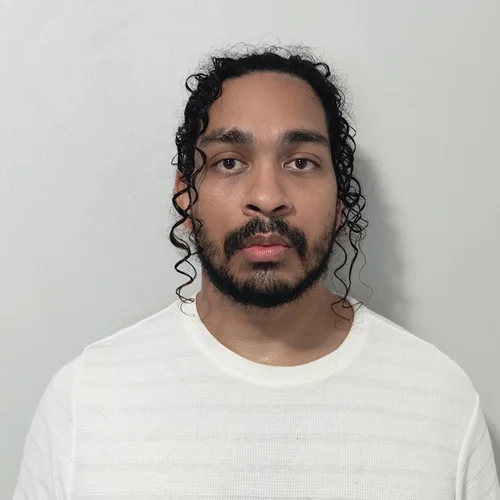
Matthew Batson
Atlantic Fellow for Racial Equity
Matthew Batson is a clinical psychologist and founder of Amethyst.
During his undergraduate studies, he founded a safe space program for LGBTQI students, where, together with university counsellors, people could freely discuss religion, sexuality, diversity, mental health and more. This experience sparked his interest in and passion for mental health.
Image credit: Lyla Adwan-Kamara and Sandra Howgate