
I landed at AFSEE feeling disoriented about social change. The richness and challenges the programme posed to me helped me to see my work—and politics—with other eyes, writes Rafael Barrio de Mendoza Zevallos.
I come from a country where advancing social justice is an ongoing, often frustrating effort. We Peruvians don’t claim exclusivity in that regard, but our experience felt especially disheartening and repeatedly delayed over the years. When I arrived in London to enrol in the Atlantic Fellows for Social and Economic Equity (AFSEE) programme as a Residential Fellow pursuing the MSc in Inequalities and Social Science, I felt disoriented by the growing divide of hostility and scepticism spreading through Peruvian society, along with frustration over the apparent lack of momentum and effectiveness in progressive actions.
This disorientation was partly rooted in the wastage and neutralization of concepts like ‘leadership’, ‘activism’, and ‘change’. Aside from becoming buzzwords, entire vehicles of meaning were emptied into autoreferential, tokenistic, or formulaic gestures. Vocabulary for actions felt hijacked in the face of complacency, societal turmoil, and entrenched inequality. My active fellowship year helped me see things differently and reconcile with the possibilities of change, both in my country and beyond.
Through reading, but particularly by sharing stories of our, in many cases, fraught lives, the AFSEE fellowship provided a productive opportunity to examine what it means to lead. Far from being a special trait of particular individuals, I rediscovered that leadership is the driving and organising effect of many talents and moral aspirations working towards a common aim. Everyone leads in different ways, under various circumstances, and according to their unique gifts and experiences. This is not an idealistic conception of collective endeavour, but a practical confirmation of how the confluence of energised persons works. To lead is to be morally committed to a desirable horizon, and thus, to embrace accountability, responsibility, and care; less a matter of gesture and more of resolve.
I also learned that being an activist takes not only a commitment to a view of social change and a disposition to put that change into motion, but also discipline, training, and, often, sacrifice. Through intensely debating lessons born out of years of political and community work, I came to understand that being political and speaking out is essential, but continuous curiosity, learning, hard work, persistence, and professionalism are equally crucial. The programme modules were an invitation to listen and share attentively.
I come from an academic and policy background, having worked with the formation of citizen-led accountability movements. My notion of activism was enriched by being exposed to other countries' processes, the stakes that a myriad of activists must engage with, and the scale and depth of their work and their trajectories. It helped me see what it takes to be an activist in my own country through the eyes of others.
Being an activist is not only about feeling motivated to act politically, but also about sustaining hard work to do so. It comes with losses and frustrations, but at the same time, with spirited convictions, granular dedication, and skill-building. It also helped me to grasp better how the tensions and commonalities between activism and the academy, movements and NGOs, play out in different contexts. All in all, I found a renewed optimism and a deeper understanding of what it takes to effect change.
But what kind of change? How urgent, by what means? I arrived at the programme touted as a ‘changemaker’, but even then, I was doubtful of what that label encapsulated and how problematic it could be. During my active fellowship year, it dawned on me that change has many paces: it gradually accumulates, it takes time, it erupts rapidly with a victory, it lags, it is macro, it is micro, it depends, it is not all that we wanted, it is not enough, it comes from unexpected places and people, it can be betrayed.
What sustains the possibility of change is persistence and the acceptance of an uncomfortable and messy path. Persuading one person or enacting a constitutional reform, donating a pound or travelling the world halfway to volunteer, having an electoral victory or helping your neighbourhood have better public services. All of these are changes, and all of them will articulate at some point if we persist.
None of these lessons came smoothly or diaphanously. They emerged because the AFSEE programme asks you to be uncomfortable, questioning, not avoiding friction, but navigating it. For me, being part of the fellowship prompted a meditation on my blind spots and previously held views. It made me embrace disorientation, but from a different departing point. It reconciled me with the possibilities of social change.
And that’s a gift of an experience.
Applications for the 2026-27 fellowship are open from 13 October 2025 until 16 January 2026. Learn more about the AFSEE active fellowship experience here.
The views expressed in this post are those of the author and do not necessarily reflect the position of the Atlantic Fellows for Social and Economic Equity programme, the International Inequalities Institute, or the London School of Economics and Political Science.
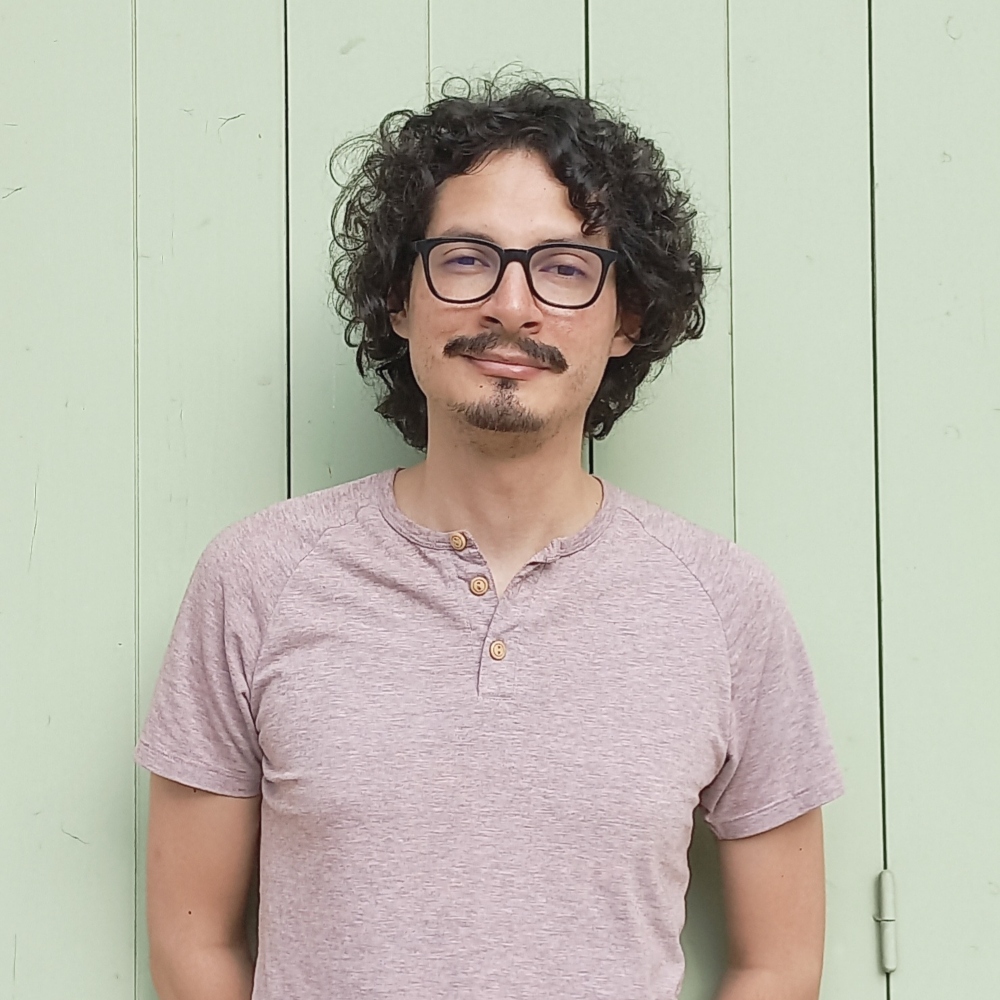
Rafael Barrio de Mendoza Zevallos
PhD Candidate, University of Cambridge
Rafael Barrio de Mendoza Zevallos is an Atlantic Fellow for Social and Economic Equity and a Peruvian social scientist interested in the multiple connections between environmental regimes, technological transitions, and the formation of public truth. He is currently a PhD Student in the Sociology Department at the University of Cambridge.
Banner Image: Photo by Mohammed Ibrahim on Unsplash