
Grassroots conservation depends on people who quietly carry enormous responsibility, protecting ecosystems while also holding together trust, relationships, and community life. Yet the well-being of these leaders is rarely treated as part of conservation itself. This raises a deeper question: who sustains those sustaining the environment?
Recognising What Often Goes Unseen
Over the past few years, working closely with community-based conservation groups in Indonesia, I have come to appreciate the depth of responsibility carried by grassroots leaders. They are expected to do many things at once, protect natural resources, support community livelihoods, and hold together relationships within often complex social environments. Much of this work happens quietly, without much recognition or support.
Beyond environmental protection, these organisations and individuals often strengthen community relationships, trust, and local knowledge, shaping the wider social fabric of the community. What stayed with me most was the emotional burden many leaders carried. Several described fatigue, pressure, and isolation while navigating community tensions in environments where personal and professional boundaries overlap.
I began to realise that while much attention is given to strengthening technical capacity in grassroots conservation, far less is given to supporting the people themselves. This is heightened even more by the fact that in some of these grassroots organisations, the work is entirely voluntary. Many individuals are not paid, yet they dedicate significant time and energy, often beyond what would be considered full-time, and often beyond their own capacity. They do this because of their strong commitment not only to environmental protection, but also to their communities.
Experiencing Inequality Firsthand
Through my work at national and regional levels, and later through exposure to global organisations, I begun to see more clearly the inequalities that exist within the broader conservation space. I met individuals and organisations who had access to supportive working environments, financial stability, and institutional backing. These conditions enabled them not only to carry out their work more effectively, but also to grow, personally and professionally. They had space to reflect, learn, make mistakes, and receive support.
During my time as an AFSEE Fellow and postgraduate student in the UK, I experienced this kind of supportive environment more directly. I was in spaces where mentorship, counselling, and care were embedded into the learning process. Having access to these spaces allowed me to pause, reflect, and better understand myself. It created a sense of safety to express ideas, including those that felt uncertain or unfinished, and to explore questions that mattered to me. During periods of burnout and personal strain, I also experienced support beyond technical guidance through spaces that encouraged reflection and emotional processing. This made it possible not only to continue working but to sustain myself through the process.
These experiences made me reflect on how rare such spaces are for grassroots leaders in Indonesia. I could not help but think about the grassroots leaders I had worked with, those operating with very limited resources and support, yet carrying equally complex, if not heavier, responsibilities. The disparity in access to care, support, and opportunity became difficult to ignore.
SiRami: Creating Space for Care
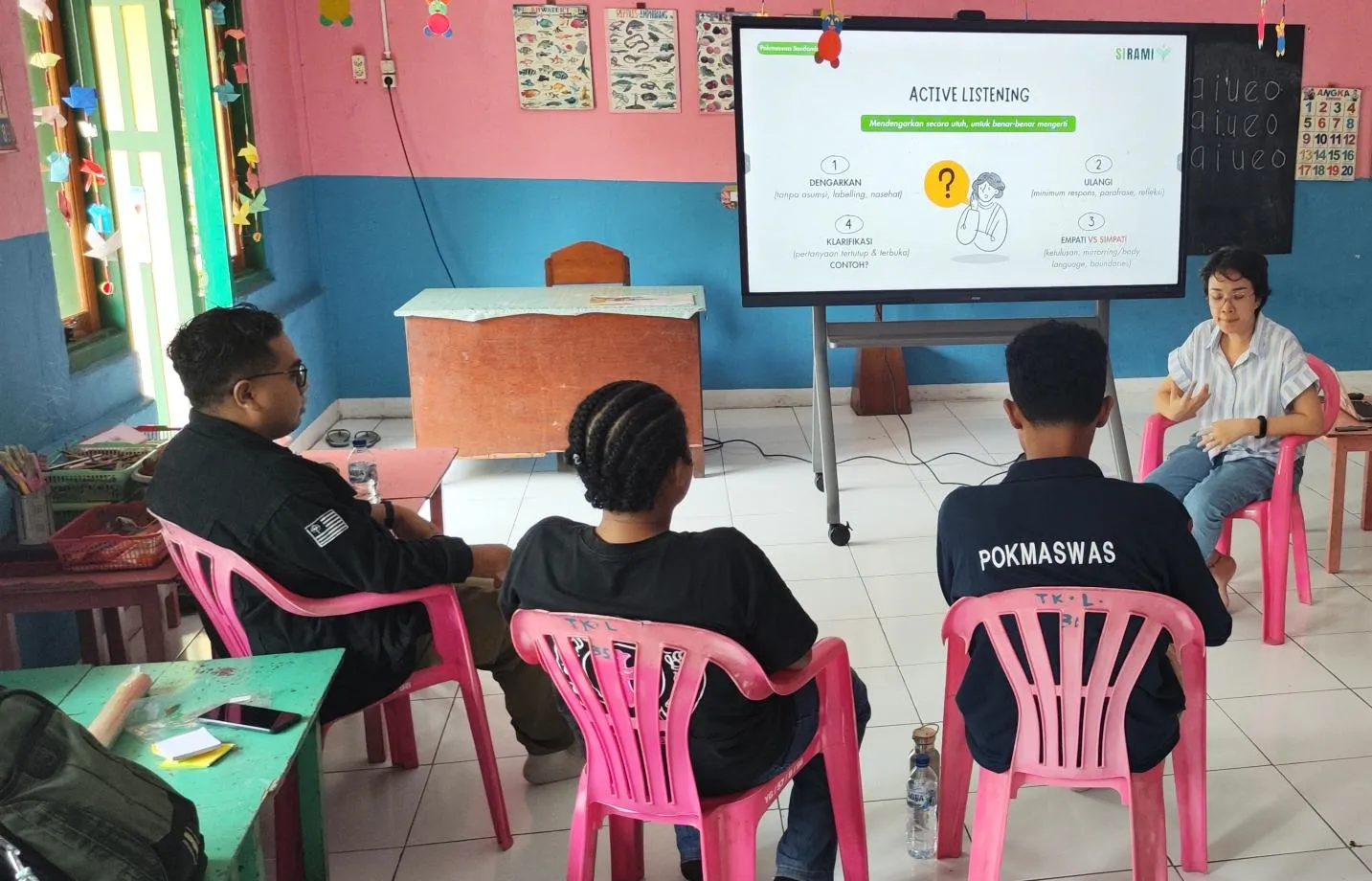
To address the inequalities I identified, I set up the SiRami project as a support space for grassroots communities in Indonesia. While it began as a personal initiative, it is now supported by a small group of collaborators, including practitioners in mental health, law, education, and other fields, who contribute to shaping and strengthening the project. Through facilitated discussions, mentorship, and well-being-focused support spaces, SiRami aims to strengthen leadership, communication, and collective problem-solving. Rather than intervening in conservation work directly, SiRami seeks to support the people behind the work, recognising that resilient communities are rooted in the well-being and relationships of those within them.
Earlier this year, the SiRami project supported POKMASWAS Sandominggo, a community-based group in Eastern Indonesia engaged in protecting and sustaining the local marine ecosystem. Their work brings together fishers, youth, women, elders, and volunteers through community monitoring, environmental education, and coastal protection. Working with POKMASWAS Sandominggo reinforced that many conservation challenges are not primarily technical, but also relational, involving communication, trust, and group dynamics. Through facilitated discussions and reflection sessions, participants began expressing these challenges more openly.
Members of POKMASWAS Sandominggo shared that the SiRami sessions gave them a rare opportunity to pause and reflect, not only on their work, but on themselves. For some, it was a moment to begin identifying the root causes of challenges they had been facing. As one participant reflected, “During the session, we found a safe space to share our challenges. It became important for us as leaders to open up, understand the root of our problems, and think about how to move forward together.”
Rethinking What Sustains Conservation
This is only the beginning for SiRami. Moving forward, we will continue to walk alongside communities supporting the development of safe spaces, strengthening leadership, and nurturing more resilient ways of working together.
This experience returns me to a broader reflection on inequality in conservation. Grassroots leaders are often expected to sustain ecosystems, communities, and social trust with very little support for themselves. Yet conservation is not sustained by technical knowledge alone. It also depends on whether the people carrying this work have space to rest, reflect, and remain resilient. SiRami is one small effort to address this imbalance by creating spaces of care and support for those sustaining their communities, because supporting ecosystems ultimately means supporting the people who hold them together.
The views expressed in this post are those of the author, and do not necessarily reflect the position of the Atlantic Fellows for Social and Economic Equity programme, the International Inequalities Institute, or the London School of Economics and Political Science.
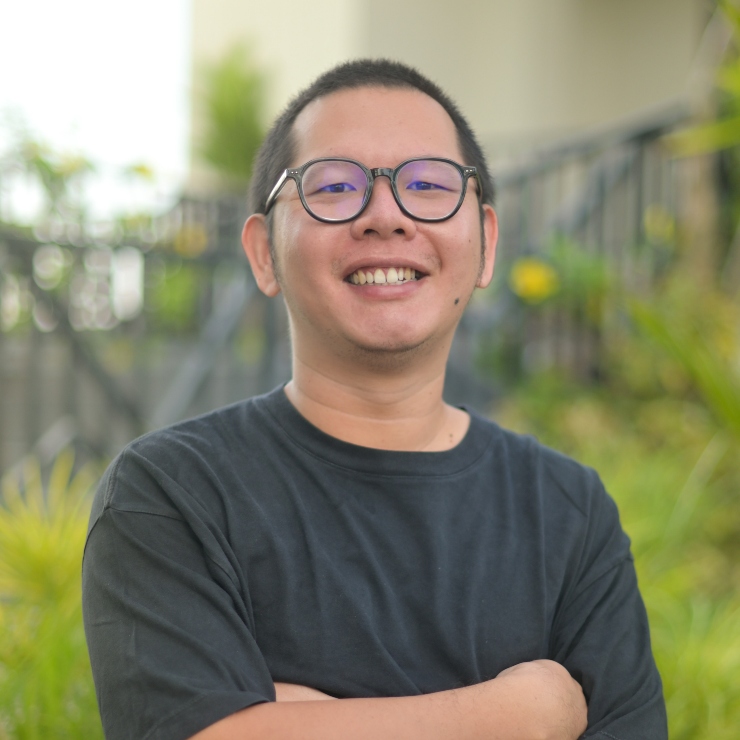
Eko Octavianus
Co-Founder, KOLEKTIF
Eko Octavianus is an Atlantic Fellow for Social and Economic Equity and the Co-Founder of KOLEKTIF, a sustainability consulting firm specialising in fisheries improvement, eco-certification, and sustainability standards, bridging the gap between international sustainability frameworks and local realities in Indonesia and the Asia-Pacific region.
Banner Image: Photo by Eko Octavianus