
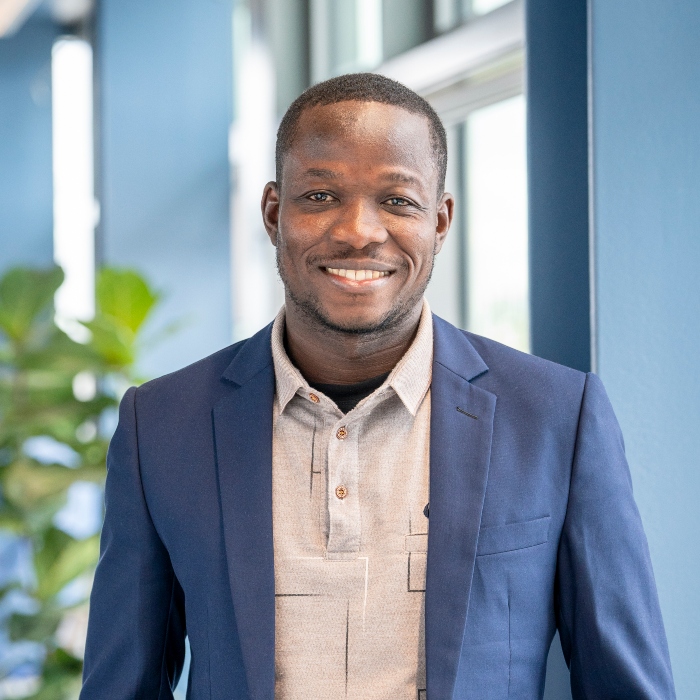
Solomon is a socio-legal scholar and human rights advocate working at the intersection of law, gender, sexuality, and state accountability in Africa. His work examines how legal systems respond to identity-based and prejudice-driven harm, with particular focus on conversion practices, gender-based violence, and the regulation of sexuality.
Solomon’s research and advocacy centre on establishing legally cognisable frameworks for harms that often operate outside formal regulation. He is currently advancing doctoral research on conversion practices in Ghana, analysing them as a form of gender-based violence within constitutional, domestic, regional, and international human rights law. His work integrates empirical socio-legal inquiry with doctrinal analysis to strengthen legal accountability and policy reform across African contexts.
Beyond his doctoral studies, Solomon engages in academic-practitioner collaborations addressing barriers to accessing gender-based violence services for sexual and gender minorities in Southern Africa. His work reflects a broader commitment to translating normative human rights standards into operational legal tools grounded in lived realities. Looking ahead, Solomon is building a research and policy platform dedicated to advancing Africa-centred socio-legal scholarship on identity-based harm, gender justice, and constitutional accountability.
Solomon holds an LL.M in Human Rights and Democratisation in Africa (University of Pretoria), his dissertation was among the earliest structured socio-legal analyses of conversion practices in Ghana. Solomon also holds a postgraduate certificate in Social and Economic Equity from the London School of Economics and Political Science. During his studies at LSE, Solomon led an Independent Project on eradicating conversion practices in Ghana, producing research and an advocacy toolkit that informed survivor-centred dialogue and legal reform debates.
I have seen change happen when lived experience is translated into credible evidence and anchored in law. When communities move from being spoken about to shaping the frameworks that govern their lives, reform becomes possible. Sustainable change does not begin with outrage alone; it begins when structural harm is recognised, documented, and addressed through accountable institutions.Solomon Atsuvia