
My AFSEE fellowship year gave me the courage, tools, and global community to turn my lived experience into a survivor-led project for justice and healing in Ghana and beyond. This is the story of how the fellowship transformed my leadership and gave birth to a new initiative, JurisVera (Justice in Truth).
Entering AFSEE: From Silence to Truth-Telling
There are moments in life when your past, your purpose, and your politics collide. For me, that moment came when I applied to the Atlantic Fellows for Social and Economic Equity (AFSEE) programme.
For years, I worked at the intersection of law and human rights advocacy in Ghana, navigating the painful realities of inequality with communities who lived them daily — queer persons, sex workers, and people living with HIV. But beneath my public work was also a personal history I rarely named. I am a survivor of conversion practices, the harmful attempts to change, suppress, or "correct" a person’s sexual orientation or gender identity. In Ghana, these practices are often normalized through religious teachings, family pressure, and widespread moral policing.
What AFSEE offered me was not just a fellowship; it was a safe space to confront the truths I had long carried quietly. It was the first time I saw a programme that valued lived experience as a form of knowledge, one that could shape scholarship, leadership, and social transformation.
A Fellowship Year that Changed Everything
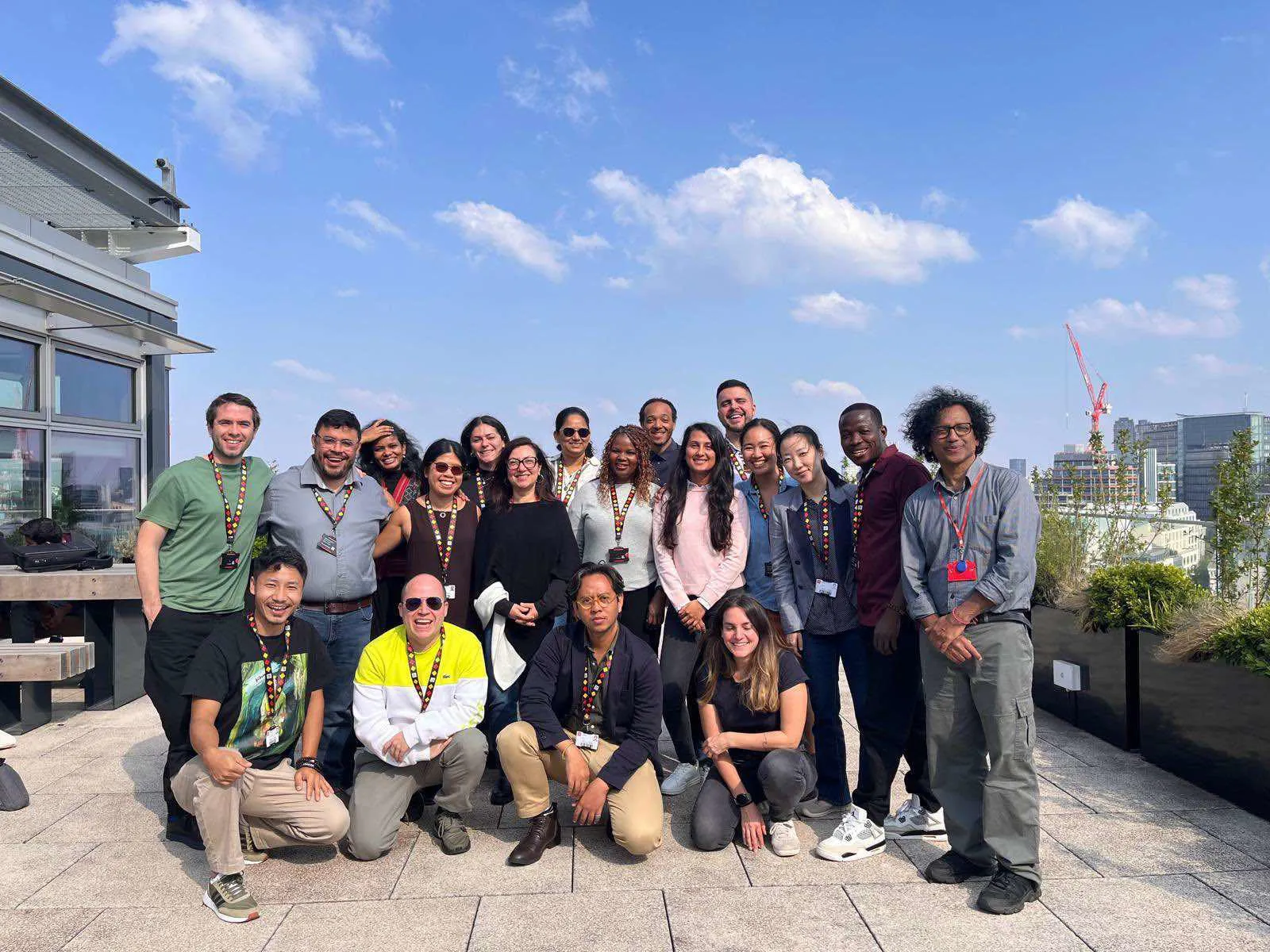
Being selected as a Non-Residential Fellow gave me the chance to continue my work in Ghana while participating in AFSEE’s deeply transformative learning modules at the International Inequalities Institute at the London School of Economics and Political Science (LSE). Each module pushed me to rethink inequality, power, capitalism, and colonial legacies, not in abstract terms, but through the lens of the communities I serve. In the Foundations of Social and Economic Inequalities module, I learned to identify the structural roots of harm, not just its symptoms. In Power and Policy, I confronted how systems legal, religious, and politicalshape identity and belonging. And through Movement-Building and Leadership Labs, I found language for things I had felt but could never fully articulate. But the most important learning happened through my 2024/25 Cohort of Fellows.
My fellow cohort all came from different countries, different movements, different struggles. Yet we recognized parts of ourselves in each other: the exhaustion of working against injustice, the pressure to be “strong,” and the reality of navigating systems designed to exclude us. It was in those shared reflections that I truly understood the power of collective action and global solidarity.
Turning Lived Experience into Liberation: My AFSEE Project
My fellowship project emerged from the intersection of my lived experience and my advocacy. I titled it: “Conversion Practices in Ghana: A Survivor-Led Toolkit for Queer Liberation.” It examined conversion practices in Ghana, their impacts, survivor agency and resistance, and the emergence of queer spaces for healing, community building, and mobilization. It became both a research report and a practical toolkit, a resource shaped by survivors, advocates, and mental health practitioners committed to trauma-informed support. It is now being used by activists and counsellors in Ghana and beyond.
By documenting the lived realities of conversion practices in Ghana, linking personal experiences to structural, legal, and religious drivers, I centered the voices of survivors who had long been silenced. AFSEE made space for stories like mine, which are often erased, misunderstood, or dismissed. It helped me turn personal trauma into a platform for community liberation.
I will present my AFSEE project under the title Barriers to Belonging: Conversion Therapy, Queer Identity, and Social Mobility in Ghana at The Future of Social Mobility International Conference, organized by the Center of Social Conflict and Cohesion Studies (COES) Chile in partnership with the Julius Baer Foundation at Santiago de Chile this December 1-5, 2025.
From Project to Movement: The Birth of JurisVera (Justice in Truth)
One of the most significant outcomes of my AFSEE journey was the birth of my new initiative: JurisVera (Justice in Truth), to drive an ongoing research and advocacy agenda titled ‘Queer Ghana Legal Futures.’ This project seeks to leverage movement lawyering to advance inclusive policies, legal empowerment, and intersectional justice, working at the nexus of law, human rights, and global health to promote equity and end conversion practices.
What started as a fellowship project evolved into a long-term vision, a survivor-centred, justice-driven initiative working at the intersection of law, lived experience, and liberation. JurisVera now:
- advocates for the dignity and rights of LGBTQ+ persons,
- challenges harmful religious and cultural practices through evidence and survivor testimony,
- builds community healing frameworks, and
- pushes for structural legal reforms based on truth-telling and justice.
AFSEE gave me the confidence, intellectual grounding, and global support network to imagine and build JurisVera as a living movement for change.
Life After the Fellowship: A Community That Walks With You
AFSEE does not end after the active fellowship year — it expands. As part of the Atlantic Institute’s global network, I now collaborate as a Senior Fellow with over 700 Fellows across multiple justice-focused programmes spanning all seven Atlantic Fellowships (Social and Economic Equity, Equity in Brain Health, Health Equity Global, Health Equity in South Africa, Health Equity in Southeast Asia, Racial Equity, and Social Equity).
I am currently part of a one-year practitioner collaborative research project called the“Equity Empower Lab”, alongside three other AFSEE Senior Fellows, investigating barriers to accessing gender-based violence (GBV) support for lesbian, bisexual, and transgender (LBT) women in Botswana. This ongoing experience is deepening my understanding of the conceptual and practical intersections between conversion practices and gender-based violence. It is illuminating how patriarchal systems and moral hierarchies discipline both sexuality and gender expression, mechanisms that render conversion practices a gendered form of violence. From this vantage point, I am currently seeking to pursue a Doctoral Research in Law (LL.D); intending to explore 'Conversion Practices as Gender-Based Violence in Comparative African Contexts'. I observe that framing conversion practices within the broader discourse on GBV could not only enrich scholarly understanding but also hold transformative potential for advocacy and policy reform.
My post fellowship experience has also led me to one of my proudest roles: becoming the 2025 -26 AFSEE Ambassador for West Africa, wherein I mentor prospective fellows, build networks, and create access for underrepresented communities. The AFSEE AMBASSADOR HUB WhatsApp community I created now reaches dozens of prospective fellows, centralising support and democratising access.
AFSEE Helped Me Become My Fullest Self
When I entered AFSEE, I was searching for clarity and tools to turn lived experience into transformative action. But AFSEE gave me something more powerful: a language for my truth, a community that held my story with care, and the courage to build something that could outlive me.
My AFSEE journey transformed my understanding of power and possibility. It taught me that justice begins with truth and that liberation is a collective act. If you are someone who carries lived experience, who has fought to create change, who wishes to break cycles of inequality, AFSEE may be the place where your own transformation begins.
The views expressed in this post are those of the author and do not necessarily reflect the position of the Atlantic Fellows for Social and Economic Equity programme, the International Inequalities Institute, or the London School of Economics and Political Science.
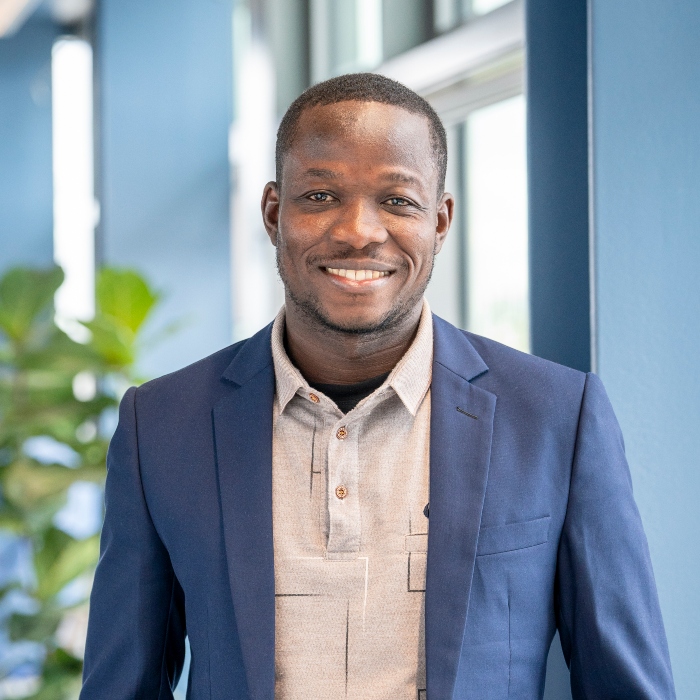
Solomon Atsuvia
Socio-Legal Researcher & Human Rights Advocate
Solomon Atsuvia is an Atlantic Fellow for Social and Economic Equity, a socio-legal scholar, and a human rights advocate working at the intersection of law, gender, sexuality, and state accountability in Africa. His work examines how legal systems respond to identity-based and prejudice-driven harm, with particular focus on conversion practices, gender-based violence, and the regulation of sexuality.
Banner Image Credit: Photo by Catarina Heeckt