Across the globe, we now regularly see the intertwined problems of polarisation, erosion of democratic values, and rapid technological growth surface to present new, complex challenges for us all. Universities do not exist outside of this context and the challenges facing our societies can at times manifest in and shape the dynamics in the classroom.
Often there is little time for academics and teachers to step back, listen, share experiences and reflect together.
This is one reason why the Atlantic Fellows for Social and Economic Equity (AFSEE’)s day-long Symposium on ‘Pedagogy & Democracy: the role of universities in polarised times,’ co-hosted by the AFSEE programme and the LSE Eden Centre for Education Enhancement on 4 June was such an important event. It provided this space for learning, reflection, and discussion about the challenges facing teachers in HE and to share insights and ideate together on the question of what it means to teach with integrity in polarised times.
The Symposium emerged out of new research; ‘Teaching about inequalities in higher education: embracing pedagogies of discomfort’, conducted by AFSEE’s Dr Giannis Ethymiou, and marked the beginning of an important conversation. Across the day, we were guided by inspiring and challenging keynote provocations from distinguished scholars: Professor Audrey Bryan (Dublin City University), Professor Tejendra Pherali, PhD (UCL Institute of Education), Dr Fin Cullen, (St Mary’s University, Twickenham), Professor Mike Seal, (St Mary’s University, Twickenham and Birmingham City University), and Dr Michael Whelan, (University of West of England).
Working together in groups, we explored the emotional and pedagogical dimensions of teaching about inequality and discomfort. We heard from leading voices in the field, and explored questions: How do we teach about inequalities in ways that are honest and rigorous? What is the role of the university in times of conflict and democratic erosion? How do we create spaces in the classroom for difficult knowledge without disengaging those we are trying to reach?
One of the day’s highlights for us at AFSEE was receiving so many thoughtful, exploratory ideas and feedback from participants. Some of which were captured by Post-it notes on the day:
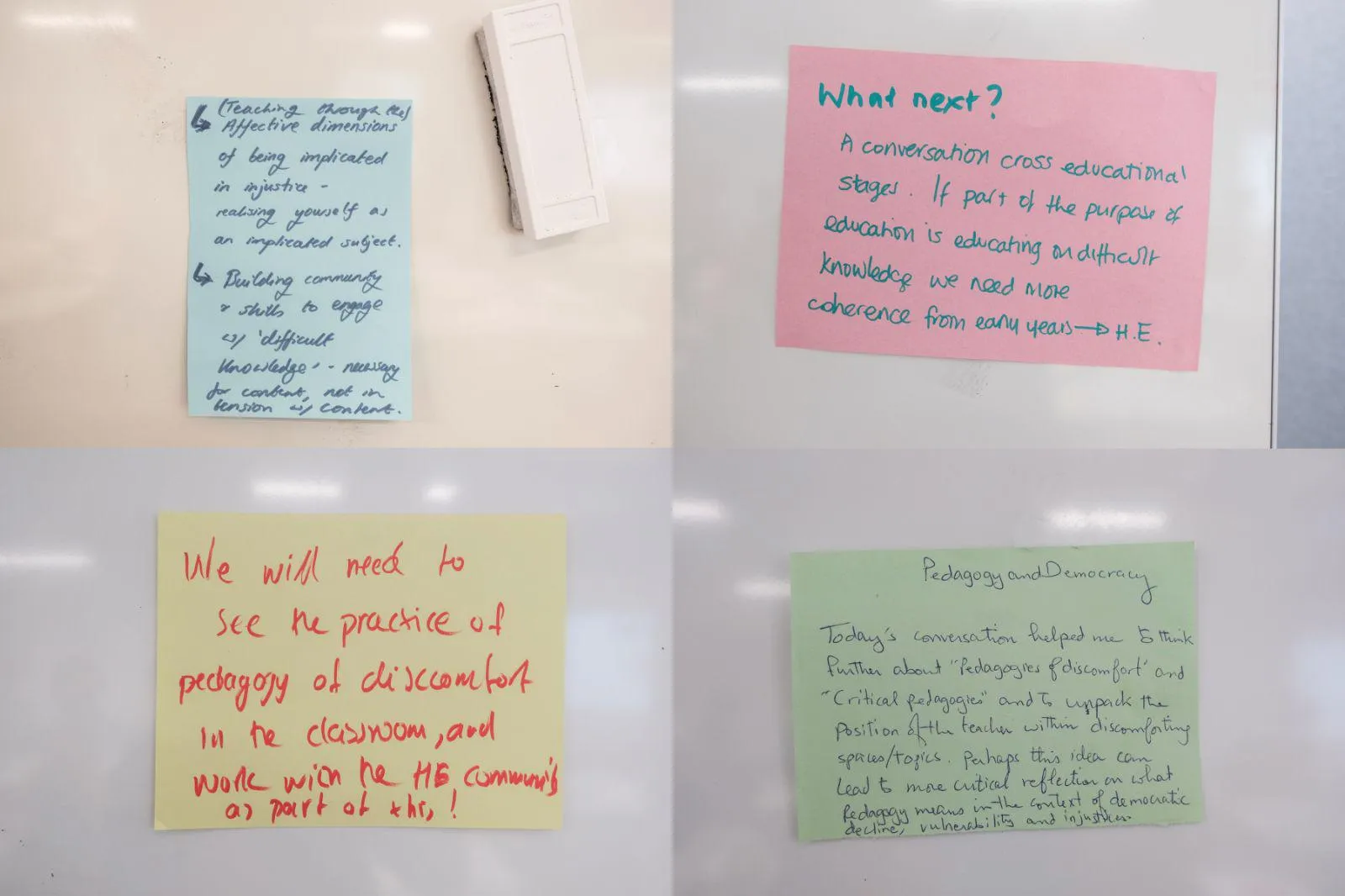
There were many excellent insights which emerged from the day’s activities. One of these recognised the importance of reflecting on emotions as part of education, especially at times of growing polarisation. Likewise, there was strong recognition from delegates of the need for higher education to remain a space for democratic debate and critical thinking, even as these become curtailed in some places.
The symposium reinforced what I believe is our shared mission: Higher Education must do more than just deliver theory. It should act as a bridge that connects rigorous research, open dialogue, and real solutions. Universities have a unique responsibility to create safe spaces and supportive environments, where difficult conversations and truths about inequality, conflict, and injustice can be explored without causing harm. For my work in peacebuilding and addressing gender inequality for girls in marginalized and conflict-affected areas, this means institutions can play a vital role in reducing division, amplifying voice, and turning classroom learning into tangible change. I especially valued the exchange on balancing academic freedom with care for students and teacher well-being.AFSEE Senior Fellow Hadija Bonaya
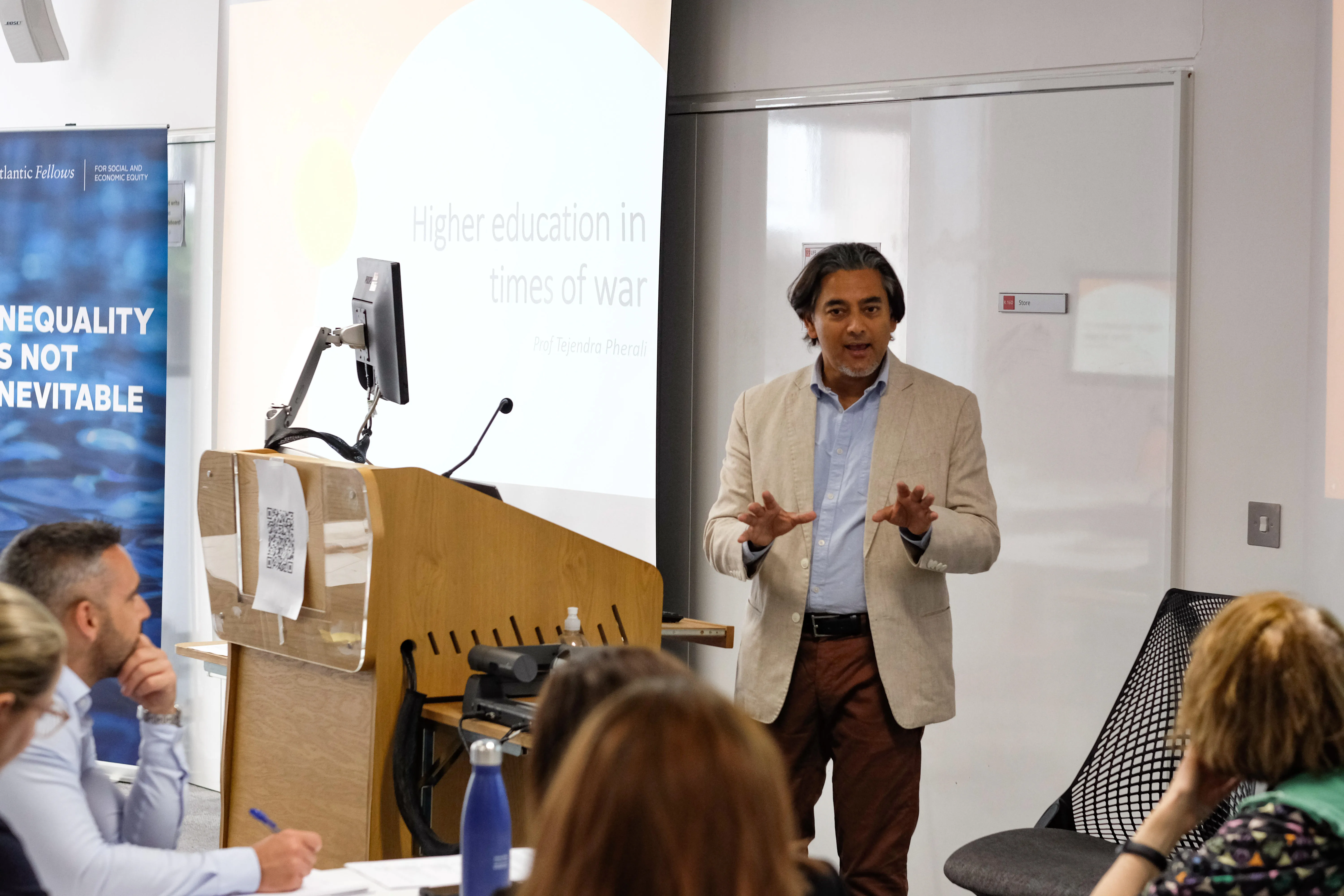
Delegates also reflected on the importance of embracing pedagogies of discomfort, and the need to continue discussing difficult knowledge in educational spaces. For example, we discussed the complexities that come with teaching about conflict and peace across contemporary contexts, learning from Prof. Tejendra Pherali’s presentation of his framework for managing these challenges.
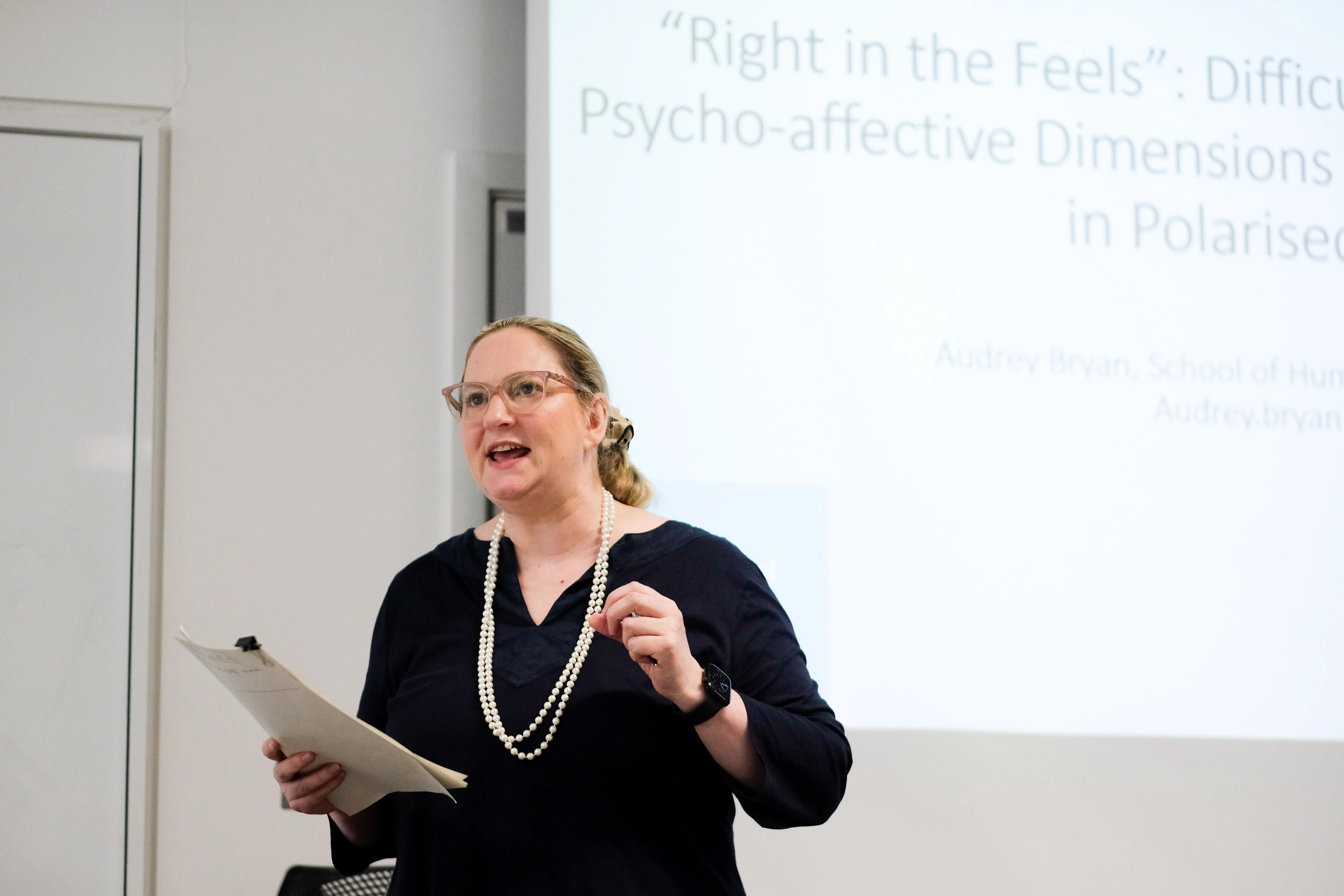
Professor Audrey Bryan explored teaching in Irish classrooms about the so-called ‘Troubles’ in Northern Ireland, and how culture, in particular popular TV programmes such as Derry Girls, might be used to both catalyse and manage sensitive discussion and emotional response.
The symposium prompted some internal reflections within the AFSEE team, reasserting our commitment to reflecting on pedagogical approaches that support educators in navigating contemporary challenges. We will carry on building on this research as we move forward and continue our close work with AFSEE Fellows.
As AFSEE Senior Fellow Stephanie Akinwoya commented, drawing on her experience as a secondary school teacher in Nigeria and PhD candidate at the Open University;
In these difficult times riddled with conflict, inequality, poverty, racism and all kinds of injustices, engaging in dialogue on these issues can cause a form of emotional discomfort. This discomfort could manifest in different forms for different learners, such as guilt in some, empathy in others, and anger and resistance. However, when navigating difficult knowledge, educators need to create brave spaces where students can engage intellectually and emotionally while being supported through dialogue and reflective practice.
Looking back on the day, Professor Armine Ishkanian, AFSEE Executive Director said;
AFSEE was delighted to host the Pedagogy and Democracy symposium at LSE. As a fellowship programme on social and economic inequalities, it has been important for AFSEE to consider not only what we teach about inequalities about also how we teach. I commend Dr Giannis Efthymiou for the work he is doing in exploring the pedagogical challenges in HE in times of democratic decline and polarisation. This symposium brought together different perspectives and gave us all much food for thought.
We are particularly grateful for support from colleagues at the LSE Eden Centre, who contributed to the design of the symposium. Dr Claire Gordon, Chair of the AFSEE Governing Board and Director of the LSE Eden Centre, shared her reflections on the day:
I was delighted to participate in AFSEE's June 4 symposium on Pedagogy and Democracy. The event exceeded my expectations, bringing together people from different intellectual backgrounds and institutional contexts to reflect on and debate questions that are challenging us in higher education today, about the purpose of higher education, about trust between teachers and students and among students and about how we create spaces imbued with intellectual generosity for difficult conversations in polarised times. The range of perspectives in the room, and the care with which the programme was curated, made for exchanges that were both challenging and generative. I want to particularly acknowledge Giannis Efthymiou, the driving force behind the event, whose careful and thoughtful programme design — built around provocations and peer discussion -- created the conditions for such positive exchange.
We look forward to continuing the discussions and building on these ideas and reflections over the coming weeks and months.
Meanwhile, tune in for AFSEE’s new podcast series, Pedagogy and Social Change , which explores how we might broaden our knowledge of the theories, strategies, and concepts which infuse the teaching of inequalities and social change. Developed and hosted by Dr Giannis Ethymiou and produced by Grace Wanebo, the series, which is based on conversations with leading educationalists across various disciplines, explores themes such as the pedagogy of discomfort and critical pedagogy, offering practical and conceptual insights into how educational practice can contribute to broader efforts for social justice.
Lastly, a big thank you to everyone who participated and helped organise the Symposium – our speakers, our facilitators, our staff, and our AFSEE Fellows Anjali Sarker, Stephanie Akinwoya, Faith Chitawo, Hadija Bonaya, Lauren Diaz, and Abicakra Mahardika who participated in the symposium.
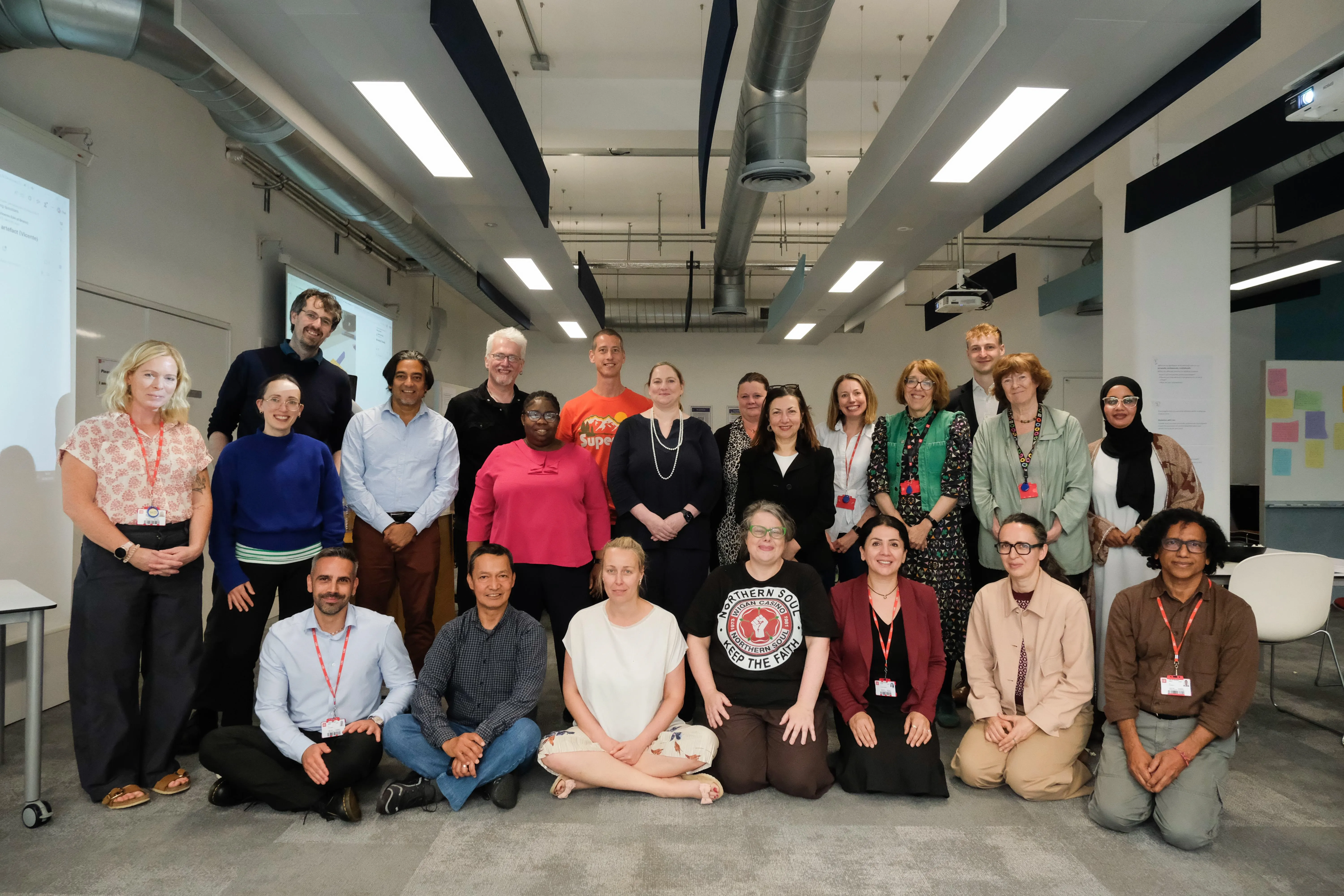
Photography by Zeashan Ashraf for AFSEE